


/file/publisher-c1a3f893382d2b2f8a9aa22a654d9c97/2023/07/44371f8417bf0a80d5e0c2b6d3a5fc79.jpg)

Group holds roundtable to push for disability justice
An intersectional and collaborative approach is essential for effectively advocating disability rights in Malaysia, urged mental health advocacy groups Siuman Collective and Anti-Death Penalty Asia Network (Adpan).
To realise this, they held a joint roundtable discussion yesterday to encourage an approach towards understanding disability, access, and the experiences of people with disabilities...
An intersectional and collaborative approach is essential for effectively advocating disability rights in Malaysia, urged mental health advocacy groups Siuman Collective and Anti-Death Penalty Asia Network (Adpan).
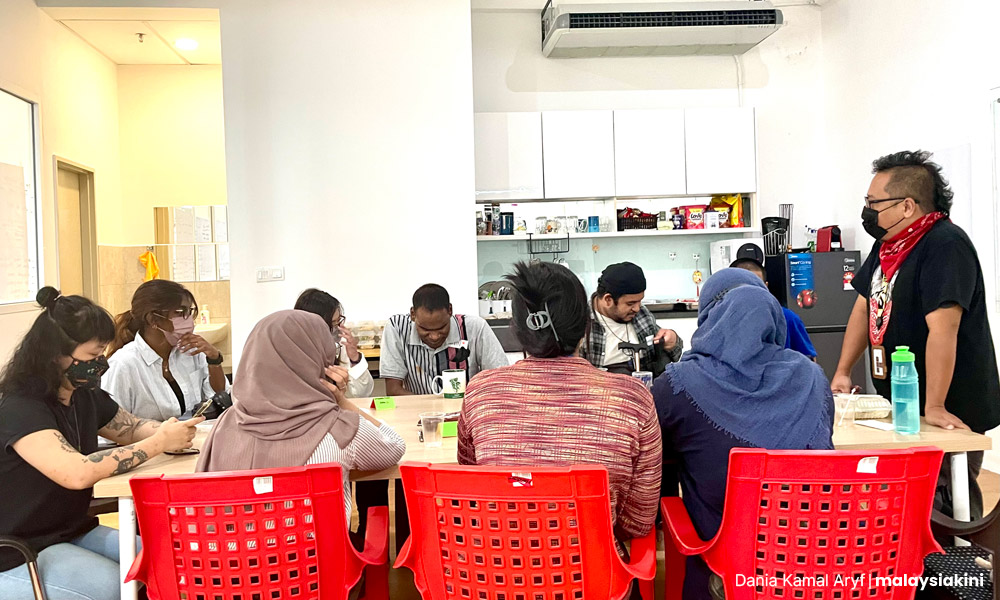
To realise this, they held a joint roundtable discussion yesterday to encourage an approach towards understanding disability, access, and the experiences of people with disabilities.
Moderator and co-host Hasbeemasputra Abu Bakar (also known as Hasbee) of Siuman explained how such collaborative discussions were necessary.
Hasbee, also a disability and community engagement leader for Adpan, said such discussions will improve conditions and correct misconceptions surrounding the experiences of people with disabilities in Malaysia.
“In addition to addressing issues concerning disabled people’s access to healthcare, education, and employment, one of the main aims of this roundtable is to discuss how we can reach out to non-advocates who are also disabled people to participate more fulfillingly in society.
“Specifically, we also want to get more disabled people to be involved in planning, governance, and decision-making,” Hasbee said at the event.
Advocacy for disability justice
He said Siuman’s collaboration with Adpan for this event also reflects how the advocacy for disability justice in Malaysia cannot be removed from how it intersects with other forms of human rights advocacy and activism.
Collaborative efforts between Siuman and Adpan highlight how disability justice becomes heavily entangled with matters of criminal justice, race, and class when understood as an intersectional issue.
Such an approach also becomes significantly more important when reflecting on how marginalised groups are at a much higher risks of experiencing violence, poverty, homelessness, and wrongful incarceration.
“Hence, as much as we are pushing for accessibility, we are also pushing for protection.
“We want to encourage participation in all aspects of society, including pushing for legal protections against discrimination.
“Unfortunately, as of now, much of the policies and legislations in Malaysia are still very limited in how disabled people and vulnerable groups, including women and racial minorities, are being protected,” Hasbee said.
Siuman was previously involved in advocating for the de-criminalisation of suicide under Section 309 of the Penal Code.
The criminal law provision was successfully repealed by the Dewan Rakyat earlier this year.
Siuman, founded in 2021, is working with other advocacy groups to amend the Persons with Disabilities Act (2008) under Section 8 of the Federal Constitution and the Mental Health Act (2001).
This is to ensure more inclusivity and protection of disabled people’s rights and those with mental illness.
Successful engagement session
The event also successfully facilitated an engaging discussion from participants across a broad spectrum of disabilities, including those with physical, visual, auditory, neurological, and psycho-social disabilities.
Present were representatives from related mental health and disability advocacy groups, including MindaKami, BolehSpace, and Autism Inclusiveness Direct Action Group.
An autistic participant stated, “advocacy for disabled persons in Malaysia does not have a shadow collective.”
This hinders the progress of disability justice in Malaysia if many of these groups remain fragmented in their collective aims and approaches, they added.
To raise awareness and correct misconceptions surrounding autism and neuro-diversity, Malaysian autistic and disability activists recently organised an ‘Autism Pride Day’ event in June 2023.
Another participant, a disabled mental health professional, noted how “many mental health professionals in Malaysia are also not trained enough to deal with an intersectional understanding of disability and neuro-divergence.”
In his closing remarks, Hasbee concluded that society should collectively get used to having such conversations, “not just with already established advocates, but also among the wider community.”
“One of the things we have to offer (by having this discussion) is that we are helping to facilitate these conversations.
“We need to empower more of each other within the disabled community. We also need to start talking to each other more about our different experiences with disability and seek to understand each other better,” he said.
Hasbee also said ongoing progress is being made for them to continue hosting similar events and discussions.
/file/publisher-c1a3f893382d2b2f8a9aa22a654d9c97/2023/02/ae999f6547f609b7c78e3c6d79da416e.jpg)
/file/publisher-c1a3f893382d2b2f8a9aa22a654d9c97/2023/04/8c1d9cb5c1d2dcd95bf616aea3c2d02d.jpg)
/file/1184/a2e816a244296f2862bbfdcf2ed989fc.jpeg)
/file/publisher-c1a3f893382d2b2f8a9aa22a654d9c97/2020/10/016b4d66fbad74d3ce60b7e86846eb9d.jpg)
/file/publisher-c1a3f893382d2b2f8a9aa22a654d9c97/2023/02/689e09d7756242d26a12703c96789778.jpg)
/file/publisher-c1a3f893382d2b2f8a9aa22a654d9c97/2021/01/8d2e3060d6ef020b772519e8ff2dcac6.jpg)
/file/publisher-c1a3f893382d2b2f8a9aa22a654d9c97/2022/08/37ade77cc411343f11a3d22954327bea.jpg)
/file/publisher-c1a3f893382d2b2f8a9aa22a654d9c97/2023/06/a2e3a7955a4b29827dd147343a202e18.jpg)


Are you sure you want to delete this comment?
This action cannot be undone.