


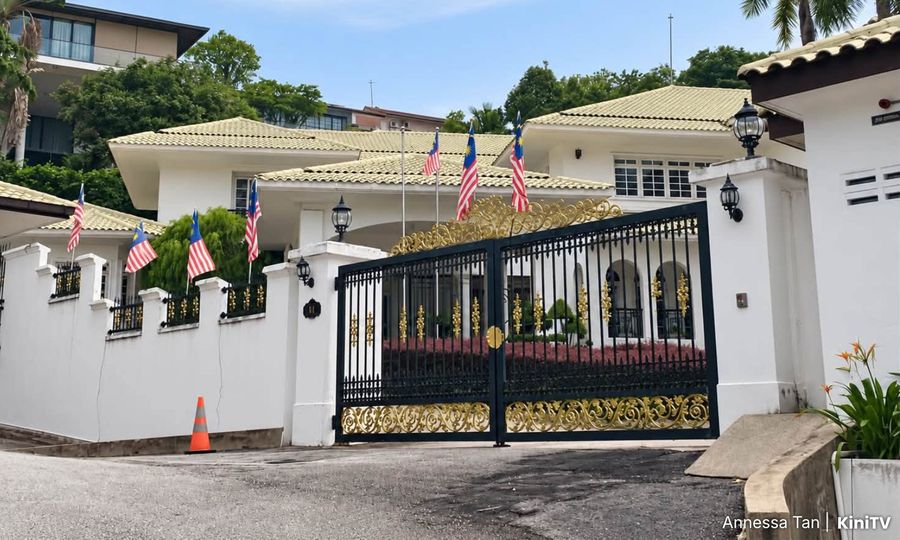

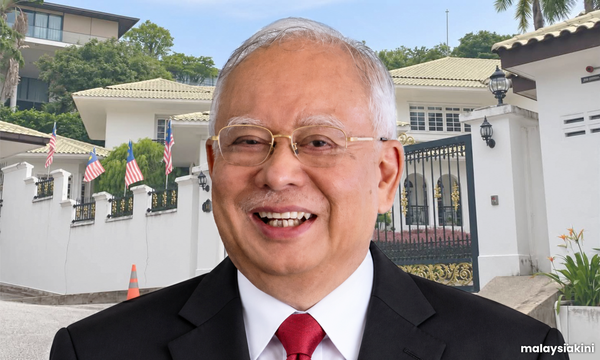
Out of Kajang, not yet home: AGC urges pause on Najib's house arrest
The Attorney-General’s Chambers (AGC) has called for an immediate temporary suspension of former prime minister Najib Abdul Razak’s house arrest, which was expected to begin today, pending clarification of legal questions surrounding his conditional pardon.
The AGC’s call came hours after Najib left Kajang Prison earlier this afternoon, following the payment of his RM50 million fine through donations raised by the Najib Razak Solidarity Fund established by Umno.
In a statement, the AGC said legal questions had arisen over the...
The Attorney-General’s Chambers (AGC) has called for an immediate temporary suspension of former prime minister Najib Abdul Razak’s house arrest, which was expected to begin today, pending clarification of legal questions surrounding his conditional pardon.
The AGC’s call came hours after Najib left Kajang Prison earlier this afternoon, following the payment of his RM50 million fine through donations raised by the Najib Razak Solidarity Fund established by Umno.
In a statement, the AGC said legal questions had arisen over the Sept 18 conditional pardon granted to Najib by Yang di-Pertuan Agong Sultan Ibrahim Sultan Iskandar following a Pardons Board meeting.
It said the pardon order, which required Najib to pay a RM50 million fine before serving the remainder of his sentence under house arrest, could be interpreted in two ways, with significantly different implications for his detention.
READ MORE: Najib gets house arrest - but how he'll be tracked remains unclear
Under the first interpretation, the payment settles only the fine, while Najib's prison sentence for his SRC International conviction continues until Aug 23, 2028.
“Based on this interpretation, house arrest is an alternative method or place to serve the remainder of the prison sentence, and not a termination of the prison sentence,” the AGC said.

The second interpretation, however, is that payment of the fine fulfils the condition for the pardon to take full effect, meaning Najib's entire sentence, including the prison term, is deemed completed.
The AGC said the issue was further complicated by the Kuala Lumpur High Court's discharge order following Najib's payment of the fine. Although the court directed that he be released immediately, it also stated that the remainder of his sentence must be served under house arrest until Aug 23, 2028, in accordance with the conditional pardon.
Another consideration is Najib's separate 1MDB-related charges. The AGC pointed to the High Court's Oct 14 rejection of his application to postpone the execution of the sentences imposed in that case, saying the question of whether any part of his SRC sentence remains also has implications for his 1MDB sentence.
Given these uncertainties, the AGC said further legal examination and clarification were necessary before executive action could be taken to implement the house arrest.
It therefore proposed that the implementation be temporarily suspended, with Najib's detention status maintained at his "existing place of detention", subject to the powers and directives of the relevant authorities.
This is understood to be referring to Kajang Prison. However, Home Minister Saifuddin Nasution Ismail earlier gazetted Najib's home at Jalan Langgak Duta as a prison, according to a federal gazette dated today.
The AGC stressed that its proposal was not intended to question or set aside the royal pardon, but to ensure that it and the related court orders were executed accurately and in accordance with the law.
“The AGC will take further action once studies and clarification regarding this matter are completed,” it added.
SRC conviction and pardon
Najib's current legal predicament stems from his conviction in the SRC International case, in which he was sentenced to 12 years' imprisonment and fined RM210 million in July 2020 after the Kuala Lumpur High Court found him guilty of seven charges involving the misappropriation of RM42 million.
The Court of Appeal and Federal Court subsequently upheld the conviction and sentence in December 2021 and August 2022, respectively. Najib began serving his prison term at Kajang Prison on Aug 23, 2022, after the Federal Court dismissed his final appeal.
In February 2024, the Pardons Board announced that the Yang di-Pertuan Agong had reduced his prison term from 12 to six years and his fine from RM210 million to RM50 million.
The reduced sentence meant Najib was due to complete his prison term in August 2028, subject to applicable remission provisions.
The Sept 18 conditional pardon subsequently allowed him to serve the remainder of his reduced sentence under house arrest, subject to payment of the RM50 million fine and compliance with the conditions imposed under the pardon.
The full details of those conditions have not been made public. Najib's lawyer, Shafee Abdullah, previously said the Prison Department had instructed his client not to disclose details of the standard operating procedures governing his house arrest.


AL is going to work from his car in Putrajaya carpark until things become clearer, haze aside.
Its a straight forward patdon la AG. Fulfilled the RM50 million fine, then can commence "house arrest" for the remaining jail term until Aug 23, 2028. After that back to prison to start his 1MDB sentence. So complicate meh?
What was the AG doing all this time, was he sleeping on the job , why act when the horse has bolted from the stables
Report this comment
Are you sure you want to delete this comment?
This action cannot be undone.