



'Different' stance from Singapore: Malaysia stays diplomatic on haze, says deputy minister
PARLIAMENT | Putrajaya has emphasised diplomacy in efforts to tackle transboundary haze issues within Asean members, referencing recent moves by Singapore which are said to have affected the city-state’s ties with Indonesia.
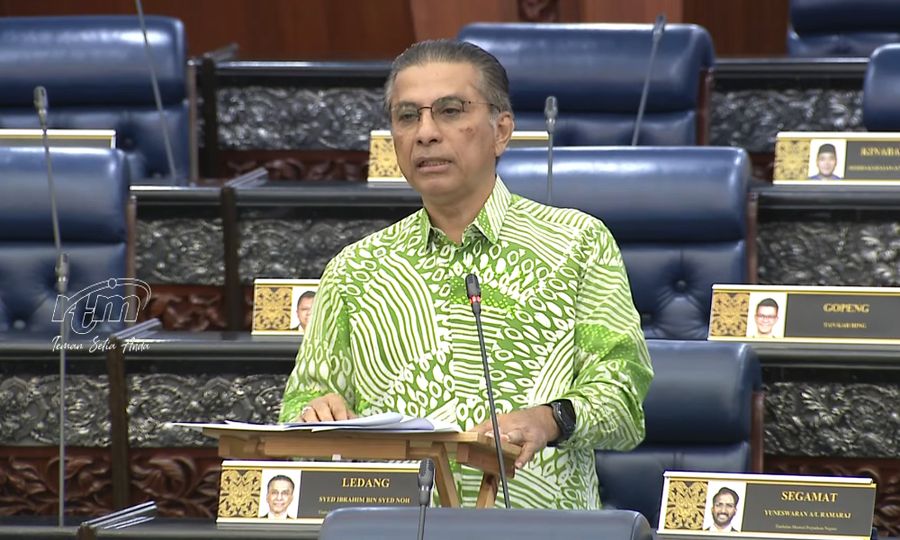
Without referring to any specific actions by Singapore, Deputy Natural Resources and Environmental Sustainability Minister Syed Ibrahim Syed Noh affirmed Malaysia’s diplomacy-first approach in the Dewan Rakyat today.
Recently, the island nation...
PARLIAMENT | Putrajaya has emphasised diplomacy in efforts to tackle transboundary haze issues within Asean members, referencing recent moves by Singapore which are said to have affected the city-state’s ties with Indonesia.
Without referring to any specific actions by Singapore, Deputy Natural Resources and Environmental Sustainability Minister Syed Ibrahim Syed Noh affirmed Malaysia’s diplomacy-first approach in the Dewan Rakyat today.
Recently, the island nation warned major Singapore-based agribusiness firms under investigation for their links to haze-causing fires.
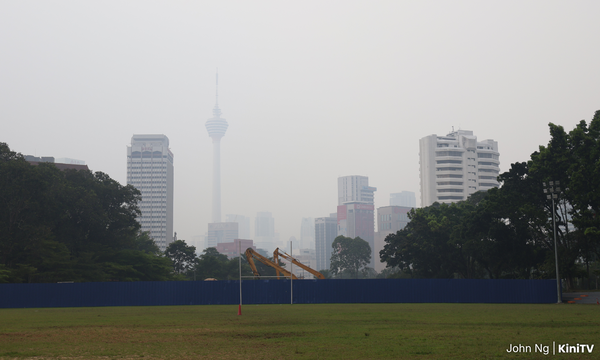
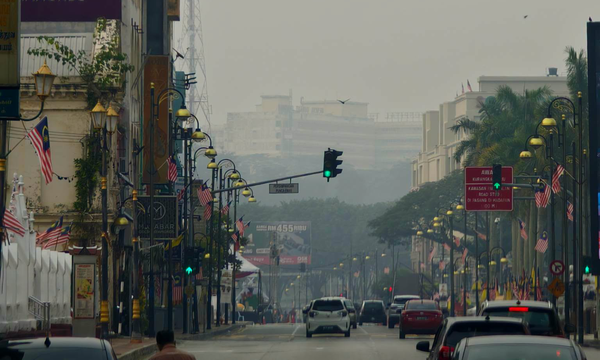
The meeting came amid concerns over unhealthy air quality due to intense haze from fires in Indonesia’s Sumatra and Borneo, with its neighbouring nations impacted by school closures and event cancellations, among others.
Addressing such anxieties, Syed Ibrahim told the lower House today that Malaysia holds a “slightly different” stance from Singapore.
“Malaysia's method of working together with Asean countries continues to emphasise diplomacy, the power of diplomacy.
“In our view, regarding Singapore, we see that their actions have actually resulted in some slight strain on bilateral relations between Indonesia and Singapore,” the deputy minister said.
READ MORE: Indonesian NGO identifies 21 Malaysian-linked firms in forest fires behind haze crisis
The Ledang MP said this in response to an additional question from Halimah Ali (PN-Kapar), who sought details on whether Malaysia is willing to learn from the “proactive” measures undertaken by Singapore.
“What actions can we take, perhaps in cooperation with Singapore, to learn from their approach so that we don't start from scratch? Can we learn from them to align our efforts?” she asked.
Yesterday, it was reported that Singapore’s Parliament has moved to toughen its anti-haze law with arrest powers, bigger fines, and potential restrictions on companies linked to transboundary air pollution from wildfires.
The proposed amendments are meant to empower its Transboundary Haze Pollution Act, which was initially enacted in 2014. However, its enforcement has been hindered by jurisdictional barriers and challenges in obtaining evidence from overseas, according to AFP.
READ MORE: No solid evidence Malaysian companies caused fires in Indonesia - environment minister
AATHP limitations
Syed Ibrahim further acknowledged that the Asean Agreement on Transboundary Haze Pollution (AATHP) presents “limitations” as it does not provide mechanisms for inter-country enforcement or compensation claims.
Stressing that the government views the agreement as a “relevant” regional cooperation framework, the deputy minister said the AATHP is anchored on the principles of consensus and respect for national sovereignty.

As such, enforcement responsibilities against parties causing fires are subject to the jurisdiction and domestic laws of the respective countries.
“That is why any proposal to introduce enforcement mechanisms or compensation claims requires comprehensive study regarding legal aspects, jurisdiction, diplomatic relations and scientific proof,” he said.
He added that the government’s focus is on methods that can be translated into actual preventive action and enforcement, namely a “science diplomacy” mechanism and a sustainable haze fund.



Incompetent lot hiding behind "diplomacy" while the rakyat suffer from haze year after year. Indonesia is not spelled "israel", so main diplomasi cukuplah, rakyat dah biasa kena tipu tiap tahun.
Diplomacy? What a joke. See who is the cronies and who's pocket is filling up
In short Malaysia is very afraid of Abang Indonesia of serumpun from the Nusantara archipelago . Indonesia will ganyang Malaysia anytime and there will be another Konfrontasi if Malaysia try to be funny with them.
Report this comment
Are you sure you want to delete this comment?
This action cannot be undone.