


Probe into 1MDB-linked pipeline scandal still open, Anwar says 'sakau' detected
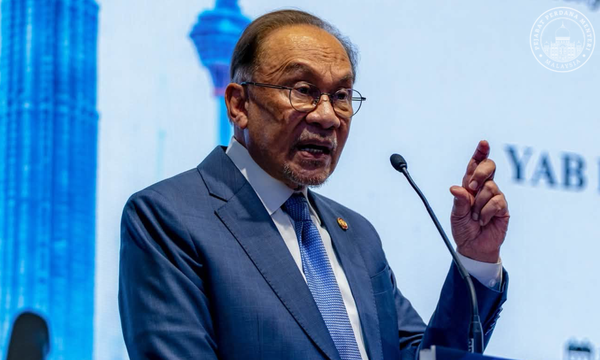
PARLIAMENT | Prime Minister Anwar Ibrahim today confirmed that investigations into the RM9.4 billion pipeline scandal, previously linked to an alleged 1MDB bailout, remain open, with elements of corruption detected.
Anwar also said the MACC had difficulty obtaining information involving China in its investigation into the Multi-Product Pipeline (MPP) and Trans-Sabah Gas Pipeline (TSGP) projects.
“The case has...
PARLIAMENT | Prime Minister Anwar Ibrahim today confirmed that investigations into the RM9.4 billion pipeline scandal, previously linked to an alleged 1MDB bailout, remain open, with elements of corruption detected.
Anwar also said the MACC had difficulty obtaining information involving China in its investigation into the Multi-Product Pipeline (MPP) and Trans-Sabah Gas Pipeline (TSGP) projects.
“The case has not been closed,” he told the Dewan Rakyat during Prime Minister's Question Time.
“When I received reports on the investigation, there were indeed elements of sakau (graft). This cannot be denied,” he said.
However, Anwar said investigators had yet to obtain certain information because the case involved two countries.
Anwar further said the investigation involved leaders from previous administrations, but stressed he did not take the matter lightly.
He was responding to Jonathan Yasin (GRS-Ranau), who demanded to know whether investigations into the projects had uncovered misconduct, abuse of power, or corruption.
Jonathan questioned what had become of earlier investigations, noting that documents had previously been seized.
The 662km TSGP is a pipeline project connecting the Kimanis Gas Terminal to Sandakan and Tawau, while the 600km MPP is a pipeline project connecting various petrochemical projects in Malacca and Port Dickson, Negeri Sembilan, to Jitra, Kedah.
Alleged 1MDB bailout
The pipeline scandal surfaced in June 2018 when then finance minister Lim Guan Eng revealed that RM8.3 billion, or 88 percent of the RM9.4 billion contract value, had been paid despite only 13 percent of construction work being completed.
The projects, approved under former prime minister Najib Abdul Razak’s administration in 2016, were subsequently cancelled by the Pakatan Harapan government.
Najib’s former special officer Amhari Efendi Nazaruddin later testified in the former premier’s 1MDB corruption trial that the two pipeline projects were among several major infrastructure deals offered to China as part of efforts to bail out the troubled sovereign fund.
Amhari’s testimony also implicated fugitive businessperson Low Taek Jho, better known as Jho Low, in planning the proposed arrangements.

However, the projects resurfaced in October 2021 when then finance minister Tengku Zafrul Abdul Aziz revealed in a parliamentary written reply that Muhyiddin Yassin’s administration had decided to revive TSGP.
The cabinet made the decision at a meeting on Feb 10, 2021, while the MPP project remained subject to further studies and negotiations with its Chinese contractor.
The revelation prompted Lim to question why Muhyiddin’s administration had sought to revive the projects without taking action against those responsible for the earlier financial irregularities.
“Even if the previous government had decided to revive and continue with the two projects, those who were involved in betraying the country’s financial interests must not be allowed to go unpunished,” Lim said in an October 2021 statement.
Lim had also urged Muhyiddin’s successor, Ismail Sabri Yaakob, to ensure those responsible were held accountable.
Anwar did not specifically address the alleged 1MDB connection or the previous decision to revive TSGP in his remarks today.
RM3b losses remain
Earlier, Anwar described the original pipeline contracts, awarded through direct negotiations without an open tender in 2016, as a serious governance failure.
The projects were awarded through Finance Ministry-owned Suria Strategic Energy Resources Sdn Bhd (SSER) to China Petroleum Pipeline Bureau.
Anwar said the contracts contained unusual provisions requiring payments according to a fixed schedule rather than actual construction progress.
He said the government was subsequently left with substantial loan repayment obligations to China’s Export-Import Bank because the financing carried a sovereign guarantee.
Successive administrations had unsuccessfully sought to renegotiate the financial obligations before the government secured an agreement on Oct 30 this year to redirect RM5 billion in financing towards a water supply project benefiting Perak and Penang.
Anwar said the arrangement reduced Malaysia’s estimated losses from approximately RM8 billion to RM3 billion.
Heads must roll
Meanwhile, Shafie Apdal (Warisan-Semporna) pressed the prime minister on enforcement action against those responsible, stressing that the scandal involved not only Chinese companies but also Malaysian officials.
“What actions can be taken?” he asked, questioning how such substantial payments could have been approved despite minimal construction progress.
Anwar acknowledged that the losses reflected serious governance failures and said Malaysia had been forced to negotiate with China from a weakened position.
“We have suffered losses. There were major weaknesses in governance,” he said.
He alleged the projects were pushed through despite questions about their feasibility to benefit certain parties.
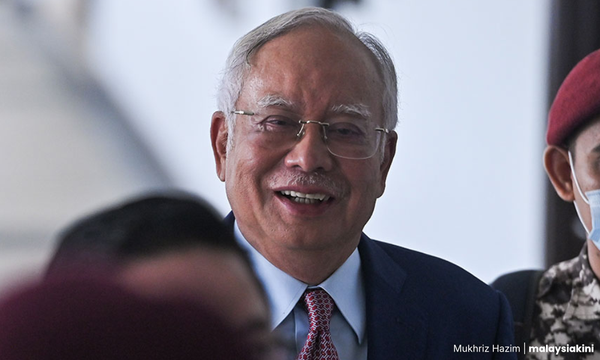
Anwar said misconduct involving several individuals had left the country shouldering billions of ringgit in losses, underscoring the need for stricter procurement controls.




"Anwar said misconduct involving several individuals had left the country shouldering billions of ringgit in losses, underscoring the need for stricter procurement controls." You could start with separating the roles of prime minister and finance minister. Put it down in law even.
Typical of The Chameleon to twist and turn without offering any real facts or action plans to resolve any issues.
Enough of the political theatrics, empty promises and endless excuses! Malaysia is not the personal ATM of politicians, nor is taxpayers' money there for greedy leaders and their cronies to squander. To every politician, minister and public official entrusted with power: Your position is a responsibility, NOT a licence to enrich yourselves! The rakyat are struggling with the rising cost of living while public money must be accounted for down to the last sen. Where is the accountability? Where are the investigations? Where are the consequences? Stop hiding behind race, religion, political alliances and carefully crafted speeches. These are not shields against accountability. We don't want another round of promises, press conferences or political finger-pointing. We want ACTION! Investigate every allegation of corruption, expose every abuse of power, recover every misappropriated sen and prosecute those responsible. If found guilty, send them to prison — no VIP treatment, no political protection, no special privileges. Malaysia does not belong to politicians. It belongs to the rakyat! The rakyat are not fools, and public funds are not anyone's private wealth. Enough of feeding the powerful while ordinary Malaysians pay the price. STOP THE THEFT. STOP THE WASTAGE. END THE IMPUNITY. LET JUSTICE PREVAIL! WE WANT ACCOUNTABILITY, NOT ANOTHER POLITICAL SHOW!
Report this comment
Are you sure you want to delete this comment?
This action cannot be undone.