


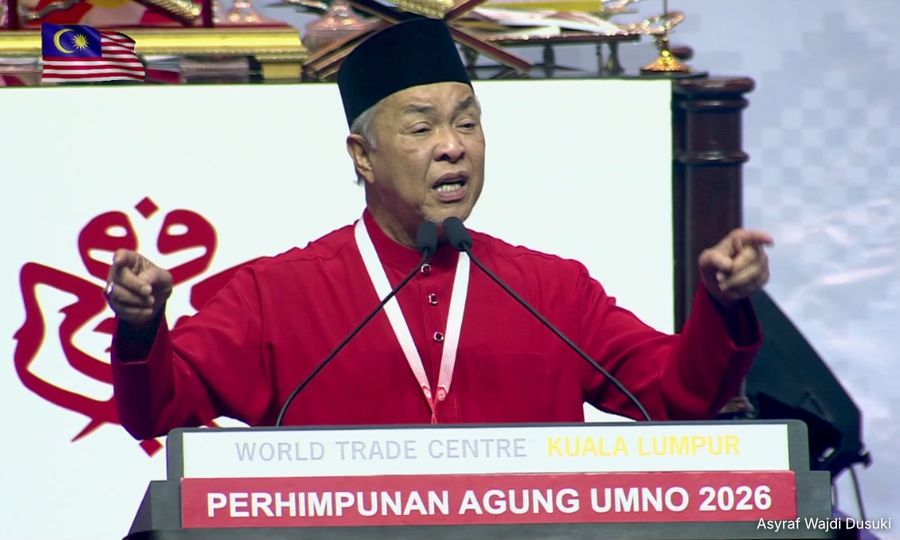

'AG's discretion accepted before, why not for Zahid', BN MP asks
PARLIAMENT | An Umno lawyer-turned-lawmaker today questioned what he described as the selective acceptance of the attorney-general's (AG) discretionary powers among MPs critical of party president Ahmad Zahid Hamidi.
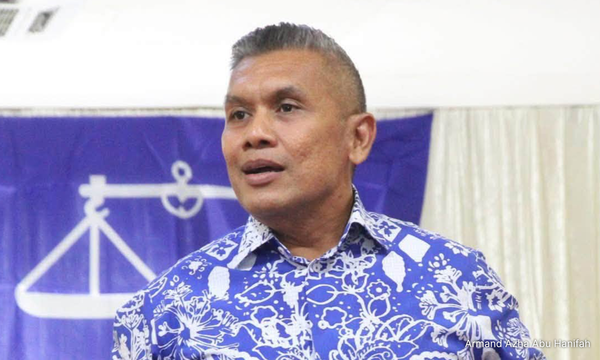
In defending the AG’s decision to drop 47 charges against the deputy prime minister, Adnan Abu Hassan (BN-Kuala Pilah) argued that the same powers under Article 145(3) of the Federal Constitution had previously been exercised in cases involving other politicians and activists...
PARLIAMENT | An Umno lawyer-turned-lawmaker today questioned what he described as the selective acceptance of the attorney-general's (AG) discretionary powers among MPs critical of party president Ahmad Zahid Hamidi.
In defending the AG’s decision to drop 47 charges against the deputy prime minister, Adnan Abu Hassan (BN-Kuala Pilah) argued that the same powers under Article 145(3) of the Federal Constitution had previously been exercised in cases involving other politicians and activists.
"If the public prosecutor's discretionary powers were accepted in previous cases, why should the same principle not apply when we assess other cases, including the one involving Bagan Datuk (MP)?
"This is not about defending any individual or political party, but about consistency in applying legal principles," he said.
Among the cases Adnan cited was Rafizi Ramli's criminal defamation charge involving Tabung Haji, which the Attorney-General's Chambers dropped in February 2019 after accepting representations from his lawyers.
Rafizi was granted a full acquittal despite having been ordered to enter his defence in September 2018, after the Magistrate's Court found that the prosecution had established a prima facie case.
Adnan also highlighted the September 2018 acquittal of DAP leader Lim Guan Eng and businessperson Phang Li Koon over corruption charges involving the purchase of a bungalow below market value and alleged abuse of power.
The prosecution had sought a discharge not amounting to an acquittal (DNAA) after accepting representations from the defence, but the Penang High Court instead granted both accused full acquittals.
"This is actually the rule of law," Adnan said during his debate on the Supply Bill 2027.
‘Part of rule of law’
Adnan acknowledged that he personally disagreed with some decisions to withdraw charges in past cases but maintained that, as a lawyer and lawmaker, he had to accept them as part of the rule of law.
"We should not defend the public prosecutor's discretionary powers when a prosecutorial decision favours certain individuals, only to question those same powers when a similar decision involves someone we dislike," he stressed.
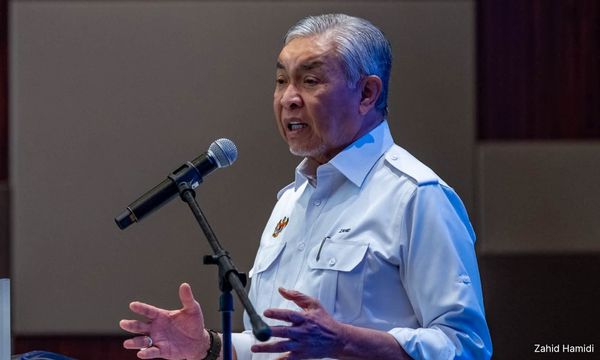
On Jan 8, the AGC announced it would take no further action against Zahid over 47 charges of criminal breach of trust, corruption and money laundering involving Yayasan Akalbudi funds.
READ MORE: 'From DNAA to NFA': AGC closes cases against Zahid
The decision followed a discharge not amounting to an acquittal (DNAA) granted to Zahid by the Kuala Lumpur High Court in September 2023.
Adnan also criticised calls for Prime Minister Anwar Ibrahim to intervene or advise the AG on the matter, warning that such demands could be perceived as attempts to influence prosecutorial decisions.

Instead, he said those dissatisfied with such decisions should pursue appropriate legal channels.
Ramkarpal challenges argument
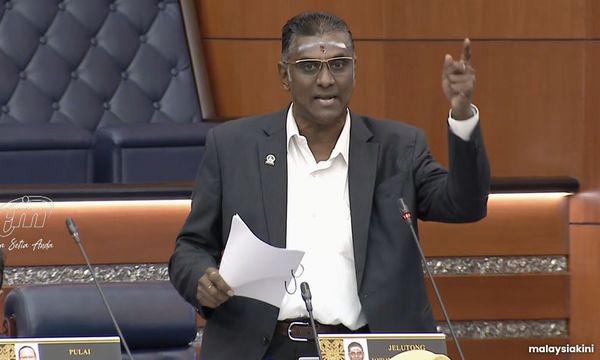
However, Ramkarpal Singh (Harapan-Bukit Gelugor) challenged Adnan's argument, distinguishing prosecutorial discretion from judicial findings made after hearing evidence.
While acknowledging the AG's constitutional powers, Ramkarpal pointed out that when a court orders an accused person to enter their defence, it has already determined that the prosecution has presented sufficient evidence requiring an answer.
"Given that the court has already made those findings, would this not be a situation in which the AG should refrain from interfering with the court's findings?" he asked.
In Zahid's case, the High Court had ordered him to enter his defence on all 47 charges in January 2022 after hearing testimony from 99 prosecution witnesses.
However, Adnan countered the DAP MP, saying there were cases where numerous witnesses had testified before charges were eventually withdrawn.
"But in my view, we cannot look at just one case to justify our argument.
"There must be consistency," he said.
He maintained that any concerns over the AG’s powers should be addressed through constitutional amendments and institutional reforms rather than intervention in individual cases.
"If we wish to amend these powers, the matter must return to this august House for amendments, so that we can determine the precise scope and purpose of the AG’s powers," he added.
Legal challenge continues
The AGC's Jan 8 decision to take no further action followed a review of additional MACC investigations and representations submitted by Zahid's defence, with prosecutors concluding that the available evidence was insufficient to sustain the charges.
However, the decision did not amount to a formal court acquittal, which Zahid has separately applied for.
The Malaysian Bar has also challenged the decision to discontinue Zahid's prosecution, questioning the exercise of prosecutorial discretion after the High Court had established a prima facie case.

In May, the Court of Appeal allowed the Bar to pursue judicial review proceedings against the 2023 decision to discontinue the prosecution.
On Oct 8, the Federal Court granted Zahid and the AG leave to appeal against that ruling, citing constitutional questions of public importance concerning prosecutorial discretion under Article 145(3).
The Bar's legal challenge is now on hold pending the Federal Court proceedings, with the High Court fixing June 14, 2027, for case management.


We respect AG discretion. It does not mean if AG use it wrongly, or we simply think AG use it wrongly, we cannot question it or exercise our legal rights to challenge it.
Kini your report " Rafizi was granted a full acquittal despite having been ordered to enter his defence in September 2018, after the Magistrate's Court found that the prosecution had established a prima facie case" is incorrect. Rafizi's defence was indeed called by the lower court. He gave evidence but the court found him guilty and fined him.Rafizi appealed and was acquitted on appeal. So our lawyer MP should know that in Zahid's case the High Court Judge after hearing many witnesses over a period of months called for Zahid's defence but AG withdrew the case and the Judge had no choice but to grant DNAA.It is a world of difference from Rafizi case .As a lawyer the MP should know the difference.Kini reporter did a bad report.
but the rule of law applies to the rich and famous, whereas the common rakyat steal 1 tin of susu for the child kena lokap...what rule of law are you talking...
Report this comment
Are you sure you want to delete this comment?
This action cannot be undone.