


/file/attachments/orphans/boycott1_685850.png)

Above the rest? How football rivalry turned into a boycott campaign of Indonesian brands
A war of words over football between Malaysian and Indonesian netizens has escalated into a boycott movement against products originating from Indonesia.
It began when Indonesia emerged as Fifa Asean Cup 2026 champions after defeating Thailand in a penalty shootout.
Following the victory, a men's personal care brand Kahf made a post on Threads comparing Indonesia to other Asean nations, with Indonesia being above the rest on a "different level", which...
A war of words over football between Malaysian and Indonesian netizens has escalated into a boycott movement against products originating from Indonesia.
It began when Indonesia emerged as Fifa Asean Cup 2026 champions after defeating Thailand in a penalty shootout.
Following the victory, a men's personal care brand Kahf made a post on Threads comparing Indonesia to other Asean nations, with Indonesia being above the rest on a "different level", which courted backlash.
/file/attachments/orphans/kahfthreadpost1_348238.png "Kahf thread post that sparks viral outcry \"Hati-hati beda level\" 091026")
The post featured a graphic of caution tape reading "hati-hati beda level" (be careful, different level) with the Indonesian flag positioned at the top, while the flags of other Southeast Asian nations - Malaysia, Thailand, Vietnam, the Philippines, Singapore, Laos, Myanmar, Timor-Leste, and Australia- were placed below the tape.
Friction between Malaysian and Indonesian netizens is nothing new; it has persisted for years over various issues, including the abuse of Indonesian domestic workers by employers in Malaysia.
Back in 2022, the government, through then-home minister Hamzah Zainudin, gave assurances that cases of domestic worker abuse would not recur.
More recently, the haze issue that affected Malaysia for months has also sparked debate between netizens of both countries.
However, this football dispute has triggered a much larger movement, with loud calls from Malaysians to not only boycott Kahf, but also several other Indonesian brands available in the Malaysian market.
Do boycotts have an impact?
Boycott campaigns are not new; Malaysian consumers previously launched boycotts against products linked to Israel and the United States following the Zionist regime's attacks on Palestine, driven by influential organisations such as Boycott, Divestment, Sanctions (BDS) Malaysia.
/file/publisher-c1a3f893382d2b2f8a9aa22a654d9c97/2024/01/f94b3a7488a18d637176670a7d9aa3ad.jpg "Palestine Protest Boycott Product December at the US Embassy KL 2023 221223 reuploaded")
It has been reported that consumer boycotts have significantly impacted the sales of US and Israel-linked products.
In 2024, Starbucks operator Berjaya Food Berhad reported a pre-tax loss of RM33.16 million for the third financial quarter ending March 31, 2024, compared to a profit of RM25.39 million during the same period the previous year - a direct result of the boycott.
Its revenue was nearly halved, dropping from RM265.85 million to RM138.65 million over that period.
The company directly attributed the steep decline to consumer boycott sentiments surrounding the conflict in West Asia.
Prior to that, in December 2023, McDonald's Malaysia filed a lawsuit against BDS Malaysia over the boycott of its products.
Gerbang Alaf Restaurants Sdn Bhd, the franchise owner of McDonald's in Malaysia, filed a RM6 million lawsuit over losses suffered by the fast-food chain.
/file/publisher-c1a3f893382d2b2f8a9aa22a654d9c97/2024/04/ed686e842c5315eeddab83df899555c9.jpg "mcd mcdonald's restaurant at klia airport generic 150424")
The lawsuit sought damages for loss of revenue (RM3 million), compensation for laid-off workers (RM1.5 million), and expired materials (RM1.5 million).
Looking at these past precedents, the solidarity of the public in this latest boycott is expected to affect Indonesian products, particularly Kahf, alongside other popular brands such as Mie Sedaap and Indomie.
It is possible that Indonesian brands could face the same trajectory experienced by Starbucks and McDonald's. If left unresolved, this boycott could also affect restaurants serving Indonesian dishes, such as ayam penyet and ayam gepuk.
Nevertheless, the impact of this boycott is not expected to be as severe as the boycott on Israel-linked products, as it stemmed primarily from online sports rivalry and anger, rather than religious sentiment or conflicts involving loss of life.
Is an apology enough?
Following the backlash, Kahf issued an apology over the controversial post on its social media account, admitting it was an "unacceptable" move.
"It did not reflect our values and the respect we stand for as a brand.
"The bond between Malaysian and Indonesian communities has always been rooted in brotherhood and respect. We are committed to upholding the same respect across all countries and cultures. We take full responsibility for falling short of that commitment.
"We have removed the post and are committed to doing better. We sincerely apologise for all the disappointment caused. Thank you for holding us accountable," the company said in a statement on Threads.
/file/attachments/orphans/KahfEverydayMalaysia1_174479.png "Kafh mens everyday product generic 091026")
Weighing in on the matter, Malaysian Muay Thai star Johan Ghazali, popularly known as Jojo, who has worked with the brand, urged the public to continue supporting Kahf.
"Clearly, the Kahf team made a rather foolish mistake, but we've all made mistakes. As long as they apologise, I don't have a problem with it," he said on Threads.
However, singer and actor Alif Satar, who serves as a brand ambassador for Kahf, disagreed, stressing that a simple apology is insufficient to cool the controversy and that consumer trust must be rebuilt, adding that actions demeaning any country cannot be condoned.
The controversy has also seen consumers and business owners, including celebrity entrepreneur Aliff Syukri, calling on Malaysians to focus on supporting local products rather than giving free publicity to foreign brands.
Preserving bilateral ties
The Indonesian Embassy in Kuala Lumpur has noted the recent boycott calls, as well as Kahf’s apology.
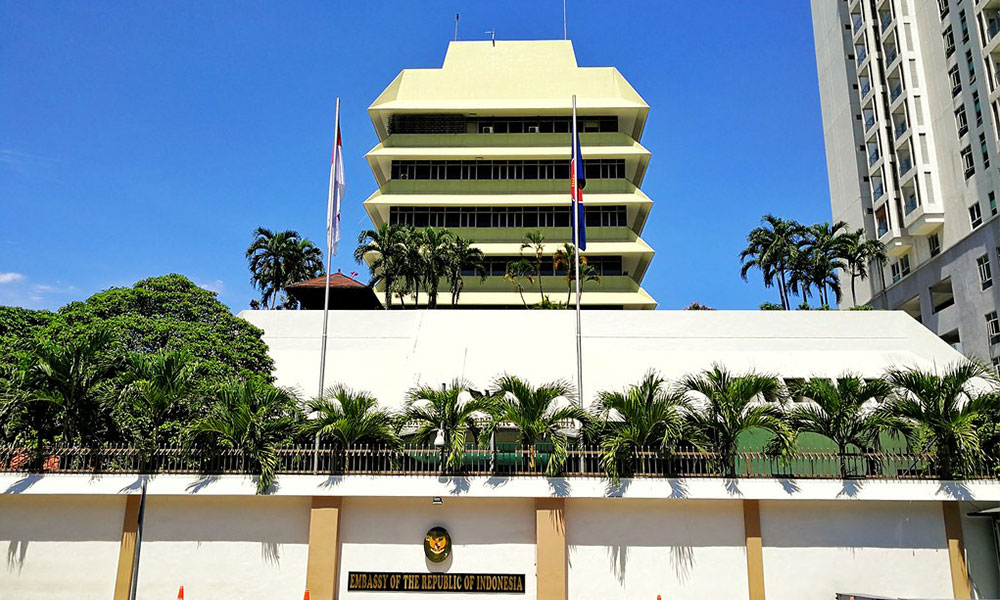
“We hope that this matter will be addressed constructively and in a spirit of mutual understanding.
“We recognise the importance of respecting each other’s national identity, values and sensitivities,” said the embassy in a statement to Malaysiakini.
“As close neighbours, Indonesia and Malaysia share a common interest in preserving our friendship and strengthening economic cooperation for the mutual benefit of both peoples, including by fostering positive relations between our businesses and communities,” it added.
Additional reporting by Alyaa Alhadjri


Kahf? What does it have to offer?
waste of time
Report this comment
Are you sure you want to delete this comment?
This action cannot be undone.