


/file/publisher-c1a3f893382d2b2f8a9aa22a654d9c97/2024/10/0413f92210d449c2c4dc6d3a263db66e.jpg)

Raise minimum wage only for M'sian workers, Guan Eng urges govt
Bagan MP Lim Guan Eng has urged the government to ensure that any new minimum wage increase applies only to Malaysian workers, warning that extending it to foreign employees would further raise business costs.
Speaking at a press conference in Parliament today, he said employers, particularly small and medium enterprises (SMEs), were already concerned about rising labour costs.
“Make sure it's only for Malaysian workers, not for foreign workers. Because...
Bagan MP Lim Guan Eng has urged the government to ensure that any new minimum wage increase applies only to Malaysian workers, warning that extending it to foreign employees would further raise business costs.
Speaking at a press conference in Parliament today, he said employers, particularly small and medium enterprises (SMEs), were already concerned about rising labour costs.
“Make sure it's only for Malaysian workers, not for foreign workers. Because you only increase the burden.
“And lately I've received many calls from many employers that are worried,” said the former finance minister.
His remarks come ahead of an expected minimum wage increase under Budget 2027, which will be tabled in the Dewan Rakyat on Oct 9.
/file/attachments/orphans/parlimenmalaysia12_383166.png "Parliament sitting 5h October 2026 Persidangan Dewan Rakyat 501026")
Human Resources Minister R Ramanan said on Sept 29 that the government had yet to decide on a new rate, dismissing speculation that it could be RM2,000-RM2,200.
Lim rejected suggestions that excluding foreign workers from a future increase could encourage employers to hire more migrant workers, including undocumented migrants.
He said employers would prefer to hire Malaysians at higher wages if enough local workers were available.
“So, if they can get local workers for, let's say, RM2,500, I'm sure they are more than happy to have that. But you can't get them.
“And then suddenly you increase for foreign workers. I think that is unconscionable... for us (Malaysians), okay, but not foreign workers," he said.
Wage pressures
On Sept 30, Entrepreneur Development and Cooperatives Minister Steven Sim (below) said the cabinet had agreed that workers’ wages should continue to rise, but micro, small, and medium enterprises would be exempted from the new minimum wage increase for the time being.
Lim, however, questioned how long the exemption would last.
“Even though you say (there is an) exemption for SMEs, but we do not know how long that moratorium will last.
“So, it's only a matter of time before we have to follow suit. So, if that happens, businesses, Malaysian businesses will be severely jeopardised,” he said.
/file/publisher-c1a3f893382d2b2f8a9aa22a654d9c97/2025/08/de4d14cc6fc14fb35edf5b5c79395693.jpg "Human Resource Minister Steven Sim at parliament 210825")
The existing RM1,700 monthly minimum wage took effect for employers with five or more workers on Feb 1, 2025, before being extended to all employers from Aug 1.
It also applies to non-citizen private-sector workers, except domestic workers.
The government has maintained that excluding foreign workers would amount to nationality-based discrimination and run contrary to existing labour laws.
Lim argued, however, that employers already incur substantial additional costs when hiring migrant workers.
“If you look at the nominal rate that is paid to foreign workers, the actual rate is actually RM1,000 more.
“Because of all the levies, all the costs associated with looking after their health, their housing minimum standards, and all that.
“This is really a heavy burden for SMEs,” he said.
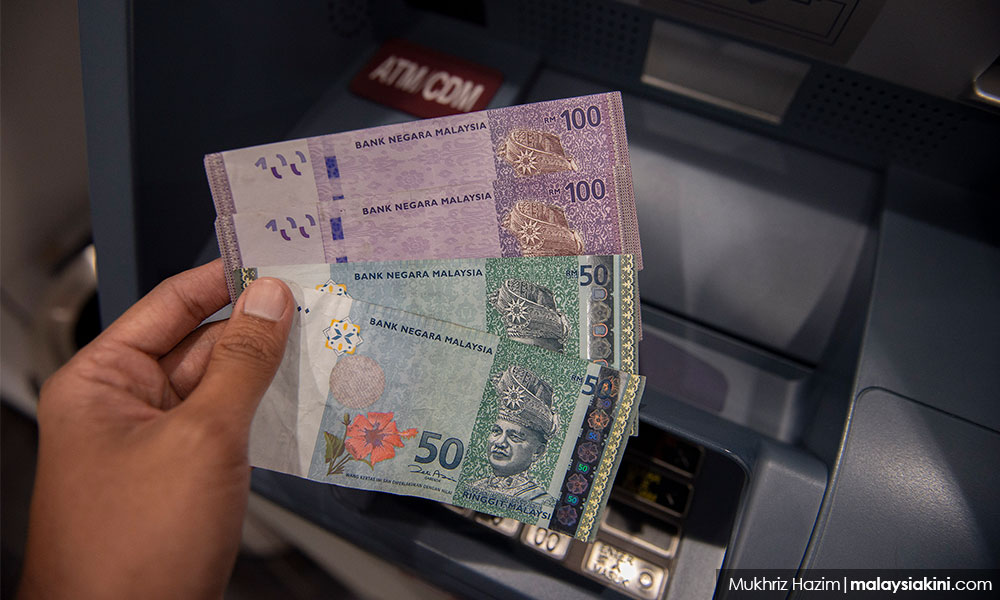
EPF exemption proposal
Lim also renewed his call for employers and foreign workers to be exempted from the mandatory two percent Employees Provident Fund contribution.
He made a similar proposal in the Dewan Rakyat in August 2025 while debating the 13th Malaysia Plan, arguing that existing migrant workers should not be subjected to either the RM1,700 minimum wage or mandatory EPF contributions because they had been recruited under earlier employment terms.
Sim, who was then human resources minister, rejected the proposal, arguing that equal minimum wages were necessary on human rights grounds and to prevent cheaper migrant labour from depressing local wages.
Migrant rights group Tenaganita also criticised Lim’s remarks, warning that excluding migrant workers from minimum wage protections could legitimise exploitative employment practices.
/file/publisher-c1a3f893382d2b2f8a9aa22a654d9c97/2020/11/09bb3af906d1a5a350afeedcce692584.jpg)
/file/publisher-c1a3f893382d2b2f8a9aa22a654d9c97/2024/10/2a534061ec1d0225e1ac663b0363c7d6.jpg)
/file/publisher-c1a3f893382d2b2f8a9aa22a654d9c97/2024/07/048c7864489888f17afe558937dc5a2e.jpg)
/file/publisher-c1a3f893382d2b2f8a9aa22a654d9c97/2026/01/ff3630ac3ae0deac70f42c6cb5b47095.jpg)


Oh, Lim doesnt know migrants are humans, too? Utterly disgraceful creature, this Lim. If vast numbers of businesses are barely surviving, there is obviously an issue of demand and supply. What may be the underlying cause is that millions dont have any specific skills and so just start a business with little know how and almost no innovation, other than undeclared sales. Does Lim know any economics to understand all of this? Classes at 7 PM, sharp.
I agree with LGE that minimum wage should not apply to foreign workers at least until all the uncertainty and headwinds in the global economy is over. This problem on the minimum wage cannot be separated from having too many local graduates who are choosy on their jobs but not looked upon favourably by employers because of their sub- standard degrees. The country should have a higher standard of entry for tertiary education so that quality graduates are suitable for all types of business entities. Using Philippines as an example, the country has so graduates who cannot find proper jobs, with many ending up doing menial jobs in other countries. Malaysia has to reform its education system to ensure that the graduates we produced are employable and not excessive.
Guan Eng should stop looking at minimum wage through the lens of political popularity and start looking at it through the eyes of the SME employer. It is easy to call for RM2,000 or RM2,500 from a political platform. But governing requires more than making proposals that sound good to voters. It requires understanding what happens on the ground. Many SMEs are already struggling with rising operating costs, rentals, utilities, raw materials, financing and compliance. A sharp increase in labour costs could push some businesses beyond the point of viability. And when an SME closes, the consequences go far beyond the owner. Workers lose jobs, suppliers lose customers and local economies suffer. If the Government wants higher incomes for Malaysians, it should pursue policies that raise productivity and earning capacity while keeping businesses competitive and viable. Politicians should spend less time chasing applause and more time listening to the SMEs that actually create and sustain jobs. A policy may be popular at the ballot box, but if it leads to business closures and job losses, who ultimately pays the price? That is the question politicians must answer before making decisions from the comfort of an office.
Report this comment
Are you sure you want to delete this comment?
This action cannot be undone.