


/file/attachments/orphans/yw123sdas_665533.png)

'Kamikaze' no more, Bersama to go for Selangor's jugular in next polls
Bersama may have gone into the Johor election on a self-described “kamikaze mission”, but the party is now recalibrating its electoral strategy and setting its sights much higher.
It plans to contest all parliamentary and state seats in Selangor at the next elections, with the ultimate aim of forming the state government.
Former Petaling Jaya MP Lee Chean Chung, who...
Bersama may have gone into the Johor election on a self-described “kamikaze mission”, but the party is now recalibrating its electoral strategy and setting its sights much higher.
It plans to contest all parliamentary and state seats in Selangor at the next elections, with the ultimate aim of forming the state government.
Former Petaling Jaya MP Lee Chean Chung, who joined Bersama yesterday, said the party sees Selangor as a key base and intends to contest all seats in the next general election and state polls.
In an interview with Malaysiakini, Lee described this as part of the party’s three-phase electoral strategy.
The first phase, he said, was what Bersama co-leader Rafizi Ramli (below, third from left) had described as a “kamikaze mission”, in which candidates entered the Johor election without being overly concerned about winning or losing, but demonstrated a strong belief in the party’s cause and their readiness to take the plunge.
/file/attachments/orphans/bersamapc1d2dsd_154080.png "BERSAMA pc press conference Lee Chean Chung officially joins 051026")
Meanwhile, Lee said the second phase is about securing a foothold. It will first aim to ensure its candidates at the upcoming Malacca election at least retain their deposits.
“Some people may say, ‘Isn't that still losing?’ Yes, but if you don’t lose your deposit, it means you are already a force that cannot be ignored.
“Then, of course, the third phase is to win seats,” Lee said in a Malaysiakini Chinese-language podcast aired on YouTube, Spotify, and Apple Podcasts yesterday.
Selangor offers biggest room for growth
The former PKR leader said Bersama believes Selangor offers the greatest potential for a breakthrough, while several of the party’s most prominent figures are also based in the Klang Valley.
Those factors, he said, naturally make Selangor one of the party’s most important battlegrounds.
/file/attachments/orphans/yw1asded_340611.png "Mkini Chinese Desk CN Podcast The Clickbaiter 051026 guest Former PJ MP Lee Chean Chung")
“We hope to form the government, and we believe Selangor is different from other places.
“First, most of our heavyweight leaders are in Selangor. Second, Selangor voters are more pragmatic and flexible, less likely to display excessive wala (blind loyalty) or to be locked into a single party or leader.
“We think Selangor voters give us that room to imagine what is possible,” he said.
Lee added that Bersama ultimately wants to become the first choice for Selangor voters, or at the very least a competitive alternative to the existing political blocs.
He stressed that Bersama “definitely has to win” in the next general election and must make a breakthrough in parliamentary seats.
‘10-20 parliamentary seats a realistic target’
Asked about Bersama’s target for the next general election, Lee acknowledged that he had only recently joined the party and was not aware of any formal seat target set by its leadership.
/file/publisher-c1a3f893382d2b2f8a9aa22a654d9c97/2025/11/8eb2168ca597b88b71b881330724ce3a.jpg "Sabah State Election 2025 voting polling day 291125 vote voting generic")
However, he thinks that winning 10 to 20 parliamentary seats would be a relatively realistic goal.
He expected most of those seats to come from urban areas, supported by voters he described as rational, moderate, and drawn from different ethnic communities.
Lee said the political significance of even 10 to 20 parliamentary seats should not be underestimated.
In a hung or closely divided Parliament, he said, a bloc of more than 10 MPs could provide considerable leverage.
“In many countries, 10 or 20 seats can become a form of leverage. You may not be able to become prime minister… but you can use that position to increase your bargaining power,” he said.
Malacca target: Retain deposits first
In comparison, Lee acknowledged that Bersama’s expectations for the upcoming Malacca state election are far more modest, contesting only 16 seats.
Asked whether Bersama had any realistic prospect of forming the state government, Lee was candid.
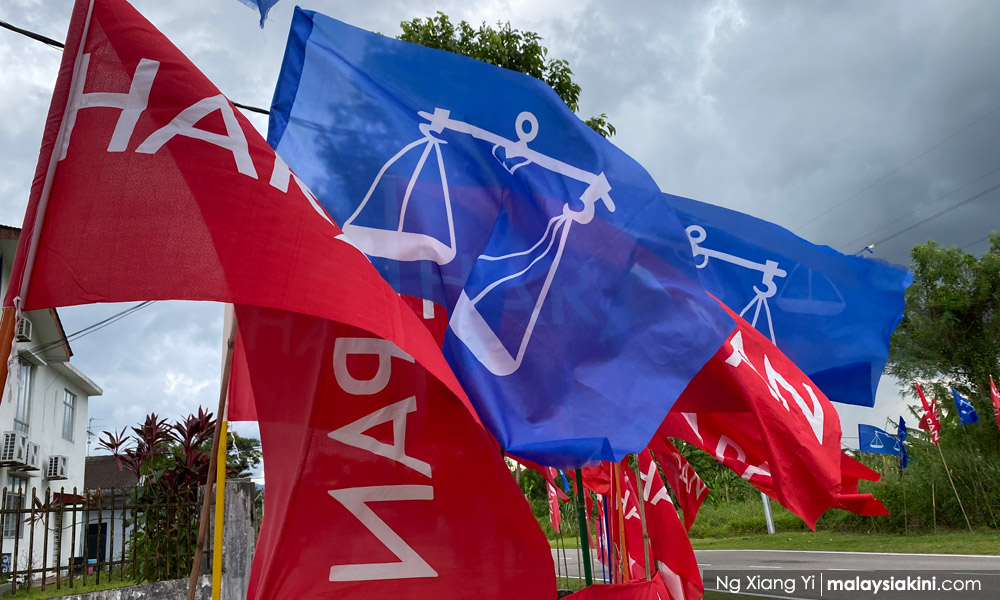
/file/publisher-c1a3f893382d2b2f8a9aa22a654d9c97/2026/07/86270a1368fcd33ae28c8dbcbb2e84aa.jpg "Bersama party flag logo generic election johor 020726")
“No, but we hope we won’t lose our deposits,” he said, adding that Bersama hopes candidates with strong local roots and name recognition can make inroads, allowing the party to gradually build its strength.
Among the candidates identified by Bersama for Malacca is Dr Solehin Saleh, the elder brother of Umno Youth chief Dr Akmal Saleh.
No immediate plans for Sabah, Sarawak
Lee also said Bersama would, for now, concentrate its resources in Peninsular Malaysia.
While the party already has members in East Malaysia, he said Sabah and Sarawak are not immediate priorities, and Bersama has no plans to contest there yet.
In terms of voter profile, Lee described Bersama’s target audience as people who think critically, are less easily swayed by fear, and are open to having more political choices.
Lee was particularly optimistic about the Klang Valley, arguing that the nature of voters there would give Bersama greater room to grow.
/file/publisher-c1a3f893382d2b2f8a9aa22a654d9c97/2023/12/826cf82429c332e72ea3bf9532408d2f.jpg "Generic crowd people tourist facemask Pix Azneal Ishak. 191223")
He said such voters can also be found along the west coast and in some urban centres on the east coast.
How will Bersama win Malay voters?
On criticism that Bersama may end up taking votes mainly from Pakatan Harapan, Lee said the party must prove that it can also win over Malay voters who lean towards BN or Perikatan Nasional.
He said some Malay voters may not necessarily regard PN or BN as their ideal choices, but end up choosing between the two blocs because they see no viable alternative.
Bersama, he said, hopes to become that alternative.
Lee also rejected the notion that Malay voters form a monolithic political bloc, arguing that Malay voting patterns have historically been more diverse than those of Chinese voters.
“Malay voters have never had 90 percent of them firmly backing one bloc in the way Chinese voters sometimes do.”
/file/publisher-c1a3f893382d2b2f8a9aa22a654d9c97/2025/04/2acb6dadb44b0419e61b2190a2e3e046.jpg "ayer kuning by-election polling day 26042025 indelible ink")
He said Bersama would struggle to reach even his own estimate of 10 to 20 parliamentary seats unless it succeeds in building support across ethnic lines.
Election partnerships
On possible electoral pacts, Lee said Bersama has no plans to work with major coalitions and particularly ruled out PAS.
“We definitely won’t cooperate with the big coalitions, such as BN or Harapan,” he said.
However, he did not exclude the possibility of reaching electoral understandings with smaller parties in selected constituencies.
He said Bersama’s priority is not to assemble a conventional alliance of minor parties, but to develop into a mainstream political force in its own right.
However, he said coordination or some form of electoral understanding with other third-force parties in certain seats remained possible.
Lee also denied that Bersama was targeting only Harapan constituencies.
He pointed out that the party contested 15 seats in the Johor state election involving BN, PN, and Harapan. Therefore, Lee said, it would be inaccurate to say Bersama is focused solely on hurting Harapan or PKR - the party from which its top leaders hailed.
He added that Bersama’s broader aim was to build a new political force distinct from the country's existing political alliances.
In the July Johor state election, Bersama failed to win any of the 15 seats it contested, with all its candidates losing their deposits.
/file/attachments/orphans/test1_716667.png)
/file/attachments/orphans/bersamapc1sded_752604.png)
/file/attachments/887/IMG_8318_704223.jpg)
/file/attachments/orphans/sgdsfasdawd_949985.png)


I do sympathise with Bersama. There's two paths going forward: (a) Support Bersama to build a credible third-force that isn't beholden to the corrupt system/status quo ala the Orange Shirts in Thailand which became a political force due to disillusionment with the yellow and red shirt parties. Even if they can't form the government, but every party has to start from somewhere. But I have doubts if they have the leadership capabilities to reach those heights. (b) Bersama doesn't gain enough traction to be a political third force, but just enough to split the vote with PH parties, condemning both to heavy losses and ushering in the Blue-Green alliance to power in Selangor with a landslide.
Hidup BERSAMA!
Rafizi should remember how difficult it was to get PKR accepted by the voters even with its reformasi slogans, not just a flash in the pan but the sacrifices by the founder members and those after. It was a black day for his supporters in PKR when he resigned after losing out to Nurul. He should have fought on. Nurul is now quite the forgotten winner, and therein was his opportunity to grab the post again. Bersama has good ideals but politics is always repositioning its strength, teaming up with enemies if necessary. So go on to win the malay votes. Fighting for non malay votes is a losing cause, aka Muda.
Report this comment
Are you sure you want to delete this comment?
This action cannot be undone.