




Britain reconsiders Batang Kali massacre inquiry
The British government has agreed review its decision against holding a public inquiry into the ‘Batang Kali massacre’ of December 1948, when 24 Malayan rubber tappers were shot dead by British soldiers. That’s the good news.
The British government has agreed review its decision against holding a public inquiry into the ‘Batang Kali massacre’ of December 1948, when 24 Malayan rubber tappers were shot dead by British soldiers. That’s the good news.
The bad news is that the government has yet to commit itself to actually holding an inquiry.
The about face comes three months after London turned down a request from Malaysian activists to investigate the killings which took place during an anti-communist crackdown when the country was under British colonial rule.
According to a letter dated April 24 and signed by Alison Chub on behalf of the treasury solicitor, a decision will be made in a couple of months as to whether to hold a public inquiry or pursue further investigations.
She said the secretary of state for defence and for the Foreign and Commonwealth Office have agreed to reviewing the decision.
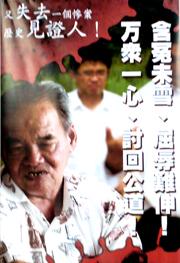 An action committee on the Batang Kali massacre has been pursuing justice and compensation for the families for over 24 for several years.
Their hopes were dashed on Jan 21 this year, when London rejected their request for a public inquiry.
The committee now seeks a quick decision, given that the 13 claimants only have up to May 8 to pursue legal action in the UK if the administrative inquiry fail to materialise.
(In April, the claimants had given notice of legal action against the British government. Under the UK laws, the claimants had a three-month deadline for the claims to be submitted. Subsequently, this period was extended to May 8.)
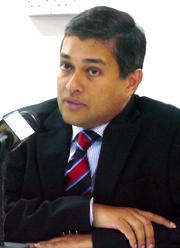 Lawyers Firoz Hussein Ahmad Jamaluddin
(right)
and Quek Ngee Meng, speaking for the committee at a press conference today, said a request has been submitted for a response from the British government by today (UK time).
Lawyers Firoz Hussein Ahmad Jamaluddin
(right)
and Quek Ngee Meng, speaking for the committee at a press conference today, said a request has been submitted for a response from the British government by today (UK time).
“We are still hopeful of a positive reply from the British government to hold a public inquiry as they already have statements from the nine soldiers who apparently shot the villagers in cold blood after holding them overnight,” Firoz Hussein said.
“They also have reports from the four surviving eyewitnesses. Tham Yong (now 78) saw the incident when she was 17. She is entitled to some form of damages or compensation following the loss of her fiance.”
Quek said they had traced nine former British soldiers and four local Malaysians who were witnesses to the events but that this pool will dwindle if the legal process takes too long.
"The British government must act quickly instead of simply dragging their feet until the surviving witnesses, who are very old, are no more," Quek told AFP , noting that one of the witnesses died last week.
No guarantee a probe be ordered
The British Broadcasting Corporation has also produced a documentary entitled ‘Inside Story’, recording the comments of the soldiers and the eyewitness, he said.
A British high commission official, who declined to be named, said there was no guarantee a probe would be ordered.
"We must not pre-empt the outcome of the reconsideration process which we expect will take several weeks," she told AFP , adding that she could not say why the decision was being reviewed.
Firoz Hussein said the case is of importance to all Malaysians, noting that “the soldiers should be liable for their actions”.
Britain had recently announced it was looking into complaints in Afghanistan and Iraq involving its soldiers.
"However, those cases are different as the British forces are there as peacekeepers. While they were in Malaya, it was a colony. They should have taken care of citizens, not shoot them down," he said.
Describing the incident as a "black mark", Firoz Hussein said it is vital for the British government to look into the case and for the truth to be told.
The inquiry should be expedited, he added, because the soldiers and eyewitnesses are getting old or sick. The youngest eyewitness is now 69, while Tham has been suffering from throat cancer for 17 years.
Quek reiterated that the British government should act quickly as "justice delayed is justice denied".
 Apart from action committee members, former MCA Public Complaints Bureau chief Michael Chong was also present at the press conference.
Chong, now adviser to the home minister, said it is good that the British government is reconsidering its decision.
He said he hoped that a public inquiry would be held to clear the names of the dead men and to award their family members some form of compensation.
Incident in brief
On Dec 11, 1948 soldiers from the Seventh Platoon of the Scots Guards entered the Sungai Rimoh rubber estate in Batang Kali, Selangor.
They were carrying out operations against communist insurgents during the Emergency declared by the British colonial government following the killing of three European planters in Sungai Siput, Perak on June 16, 1948.
When the soldiers entered the rubber estate, they accused the workers of aiding the communists and executed one man. They then separated the men from the women and children.
The women and children were removed on trucks and the men were interrogated. Twenty-four of them were killed the next day. The soldiers burned their quarters.
According to eyewitnesses, the men were unarmed and did not attempt to escape.
However, an official inquiry dated Nov 1, 1949, concluded that "the suspects (the 24 villagers) would have made good their escape had the security forces not opened fire".
The issue resurfaced on Feb 1, 1970 when British newspaper The People ran the story, including sworn statements from British soldiers.
The report claimed that the soldiers had received prior instructions to kill the workers and that the soldiers had been given the opportunity to opt out of the operation.
The soldiers also told The People that the workers were shot although they did not attempt to escape and that the 1949 investigation had been deliberately misled.
These revelations created an uproar in UK. The British government then launched a new inquiry which was closed by the Conservative government later that year, citing insufficient evidence.
The families are seeking an official apology, monetary compensation and a memorial to be constructed in honour of the deceased.
They also want the British government to have an independent public inquiry into the incident, but do not intend to press criminal charges against the soldiers.
The action committee had backed its case with a petition to Queen Elizabeth on March 25, and again on Dec 12, 2008.


Are you sure you want to delete this comment?
This action cannot be undone.