




Pak Lah - The good and the bad, Pt 2
In Part 1 , we discussed the positive aspects of Prime Minister Abdullah Ahmad Badawi's five-year administration which is due to end in March next year. Just as we were generously charitable in outlining five positive aspects of his administration, we will be equally restraint in naming only five negative aspects of that same administration.
In attempting to account for the failings on an administration that went from having the largest parliamentary majority in Malaysian political history to the smallest, the challenge is finding a place to start.
In Part 1 , we discussed the positive aspects of Prime Minister Abdullah Ahmad Badawi's five-year administration which is due to end in March next year. Just as we were generously charitable in outlining five positive aspects of his administration, we will be equally restraint in naming only five negative aspects of that same administration.
In attempting to account for the failings on an administration that went from having the largest parliamentary majority in Malaysian political history to the smallest, the challenge is finding a place to start.
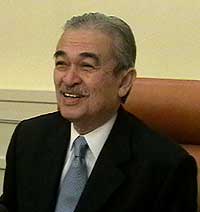 Perhaps Abdullah's biggest failing was his inability to clamp down on corruption, one of the cornerstones of his elections platform in 2004. Buoyed by his own relatively clean image, most voters were willing to put their hopes in his promise of eradicating corruption in politics and most notably, within the Barisan Nasional.
This is not to say that there were no skeptics but most people were giving Abdullah the benefit of the doubt. There was a radio interview given by Abdullah shortly before the polls where a woman called in and asked if the ACA charges brought up against Eric Chia and Kasitah Gaddam was just window dressing. Abdullah replied, 'Just you wait and see'.
Well, we waited and waited for over four years and we're still waiting. The ACA charges brought up against Chia and Kasitah was exactly that - window dressing. Chia was acquitted (he passed away shortly after) and Kasitah's case is still making its way through the courts. More significantly, no other big fish have been netted in the past four years.
He closes both eyes to graft
Furthermore, Abdullah adopted not a 'close one eye' but 'close both eyes' policy against two of the most high-profile cases involving Umno politicians who could easily have been charged by the ACA.
Zakaria Deros, former state assemblyman of Port Klang, was found to have built a huge 'palace' without having the proper permits. Mohd Said Yusof, former MP of Jasin, was also accused of asking Customs officials to 'close one eye' in regards to a consignment of imported timber. Both were let off with not even a slap on the wrist. By the time of the 2008 elections, Abdullah's credibility in terms of fighting corruption was down to zero.
While Abdullah himself was not guilty of playing the race card or stoking racial sentiment, he is responsible for allowing many Umno leaders, including the Umno Youth chief and his deputy, to openly express sentiments that were viewed as extremist by the non-Malay community.
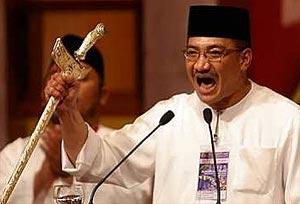 The high point (or low point, depending on your perspective) of this was encapsulated by the photo of the Umno Youth chief, Hishammddin Hussein, raising the ‘keris’ and letting out a primal shout. It will be some time before he can shake off the monicker - 'Kerismuddin'.
The invectives unleashed against the non-Malay BN component parties during the 2006 Umno general assembly, which were telecast live, further fueled the notion that Umno leaders were getting out of control. Instead of publicly and strongly reprimanding his own leaders for this kind of racial invectives, Abdullah did nothing, giving the impression he condoned, if not approved, such comments.
It was a popularly conceived notion that behind many of Abdullah's decisions was the hand of his son-in-law, Khairy Jamaluddin. Abdullah simply did not do enough to dispel the notion that he was over reliant on Khairy and his '4th floor boys', a term used to describe a group of young advisors which Khairy has assembled and put in the PM's office in Putrajaya.
Perhaps Abdullah's failure to adequately dispel this notion was because there was a kernel of truth in his overdependence on Khairy. Whether or not this was actually the case, we cannot conclusively say. But the impression created was that too much power was being centralised at the hand of Khairy and this created a lot of negative sentiment towards Abdullah not only amongst the electorate but also Umno leaders and members.
‘Sleeping’ on the job
If there was one adjective that would accurately describe Abdullah, it would probably be 'indecisive'. He did not have the backbone or mental fortitude to make the hard decisions that was necessary to implement reforms, both big and small. He vacillated on most important issues and skirted important challenges instead of taking them head on. This created the impression that he was not really in control and thus lost him respect amongst BN leaders.
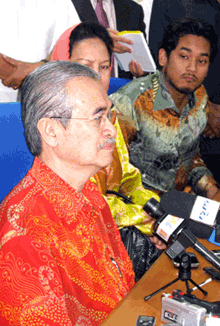 There were stories emerging from cabinet meetings from unofficial sources which implied that many cabinet ministers had little respect for Abdullah and his leadership.
The image of an indecisive leader was further accentuated by the many pictures circulated on the internet of Abdullah literally 'sleeping' on the job. (The top four hits from a Google search with the words 'sleeping prime minister' are associated with Abdullah and 10 out of the first 16 Google images using the same words are associated with Abdullah)
Lastly, Abdullah's administration is perhaps exemplified by a long litany of unfulfilled promises. Remember the promise for cabinet members to declare their assets made in 2004 and later in 2008? Remember the supposed reform of the police force that started with a royal commission? Remember the phrase 'work with me, not for me'? Remember 'Cemerlang, Gemilang, Terbilang'?
The sad fact of the matter is that we cannot even name one significant reform which Abdullah has put in place in his five years as prime minister. This is not even a case of poor implementation. There has been no implementation.
Abdullah will go down in history as Malaysia's worst prime minister to date. Ultimately, he may be remembered for the prime minister who was responsible for BN's eventual fall from power. But he is no Gorbachev. If Malaysia does eventually become a full democracy in the near future, it will be because of Abdullah's accidental contribution rather than a purposeful one.
It pains us to see how an administration that began with so much promise can leave with so little achieved.
At least Abdullah can take some pride in having contributed a new word to the Malaysian English lexicon as a result of his administration – a joke that's been making its rounds on the Internet. To 'Badawi' is to 'Start something full of promises but ends in disappointment, failure and/or disaster' according to urbandictionary.com.
ONG KIAN MING is a PhD candidate in political science at Duke University and YUN YANG is a writer and new media analyst. You can listen to both of them discuss this topic in their Realpolitik podcast.
Previous Realpolitik podcasts


Are you sure you want to delete this comment?
This action cannot be undone.