


/file/publisher-c1a3f893382d2b2f8a9aa22a654d9c97/2025/10/61958fcbb68f7244e984c2038698cc25.jpg)

URA postponed to consider 14 proposals, Zahid says
Bernama quoted Deputy Prime Minister Ahmad Zahid Hamidi as saying that the deferment was necessary to strengthen the bill by incorporating the views of various stakeholders who participated in the convention...
The decision to postpone the re-tabling of the Urban Renewal Bill (URA) in Parliament was made after taking into account 14 improvement proposals submitted at the URA Convention held on Oct 3 last year.
Bernama quoted Deputy Prime Minister Ahmad Zahid Hamidi as saying that the deferment was necessary to strengthen the bill by incorporating the views of various stakeholders who participated in the convention.
“The postponement was made because the existing bill needs to take into account the 14 recommendations that were deliberated at the convention organised by Umno, which was attended by many NGOs, industry players as well as individuals who wish to further strengthen the law before it is re-tabled in Parliament in the next sitting,” he said.
Zahid, who is also Umno president, spoke to reporters after officiating a dinner in conjunction with the Golden Jubilee Celebration of the 50th Anniversary of the Indonesian Higher Education Alumni Association yesterday.
The 14 proposals are aimed at safeguarding residents’ rights and tightening oversight of redevelopment projects.
Among the ideas proposed are:
Fair, comprehensive compensation: Not just market value but must include equivalent replacement housing, moving costs, loss of income, and liveable relocation plans.
High consent threshold: Consent must be very high (95 percent for buildings lesser than 50 years old and 90 percent for the ones older than that. Land Acquisition Act should only be invoked as a last resort.
Protect tenants and indebted owners: Tenants and owners still paying loans must not be excluded from protection.
No forced eviction: Nobody can be removed until consent meets the required threshold.
Joint federal-state approvals: Both governments must approve; no unilateral decisions.
The proposals also underscored the need for clear, specific definitions in any redevelopment framework, with clear distinctions between redevelopment (full rebuilding), regeneration (area improvement), and refurbishment (repairs or upgrades to existing buildings).
‘Criminalise pressure’
At the same time, the government is also urged to criminalise intimidation by developers, with any act of pressure, coercion, or threats against residents - whether verbally, in writing, or through other methods - should be treated as a criminal offence.
Earlier yesterday, Umno secretary-general Asyraf Wajdi Dusuki said the party maintained its firm stance that it does not oppose urban development, but stressed the URA needs to be improved and refined.
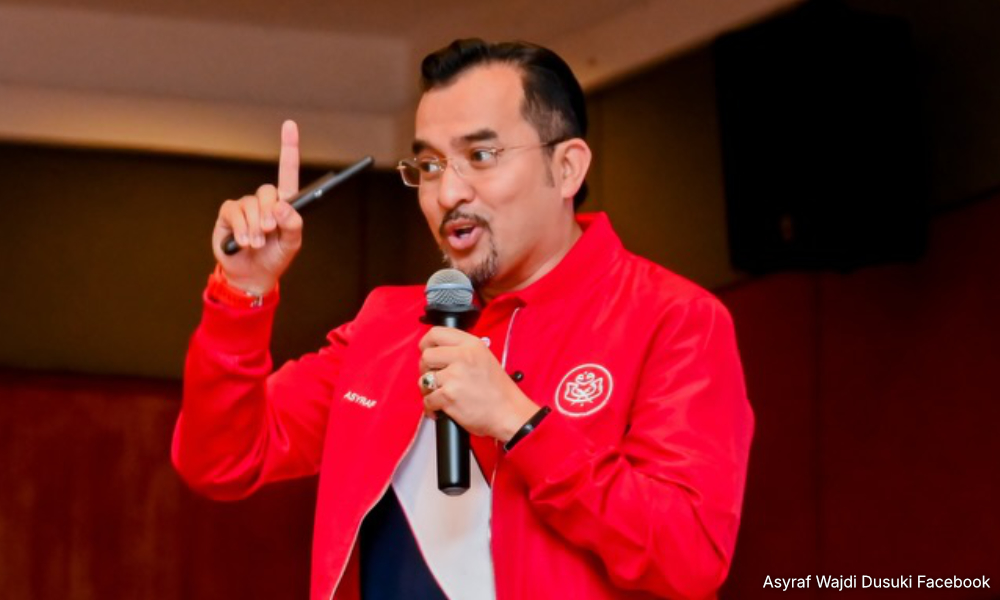
He also said several amendments must be made as proposed by the Umno Special Committee on the URA, chaired by its vice-president Johari Abdul Ghani.
Asyraf added that the special committee had conducted several engagement sessions, including the URA Convention.
Umno’s objections to the URA Bill and the 14 proposals were also raised at the party’s recent annual general assembly.
Federal Territories Wanita Umno delegate Mona Azlyn Shariff, in her debate over the wing’s chief Noraini Ahmad’s policy speech, had said the bill has “too many loopholes” which have yet to be addressed.
/file/publisher-c1a3f893382d2b2f8a9aa22a654d9c97/2026/01/99ec8af5389bb1762b8d314efa0dc402.jpg)
/file/publisher-c1a3f893382d2b2f8a9aa22a654d9c97/2026/01/37ae270621c48deefe9b609b76966b84.jpg)
/file/publisher-c1a3f893382d2b2f8a9aa22a654d9c97/2026/01/324f40fef874e93c3c818987f48e3eae.jpg)
/file/publisher-c1a3f893382d2b2f8a9aa22a654d9c97/2025/03/a5a1d2def293f1aa13ccae635a712ce3.jpg)
/file/publisher-c1a3f893382d2b2f8a9aa22a654d9c97/2025/10/fa34213080e81e1bda53ecbd45e60932.jpg)
/file/publisher-c1a3f893382d2b2f8a9aa22a654d9c97/2025/10/676bee8a3a5b45ed51272f22ef768e77.jpg)


Are you sure you want to delete this comment?
This action cannot be undone.