


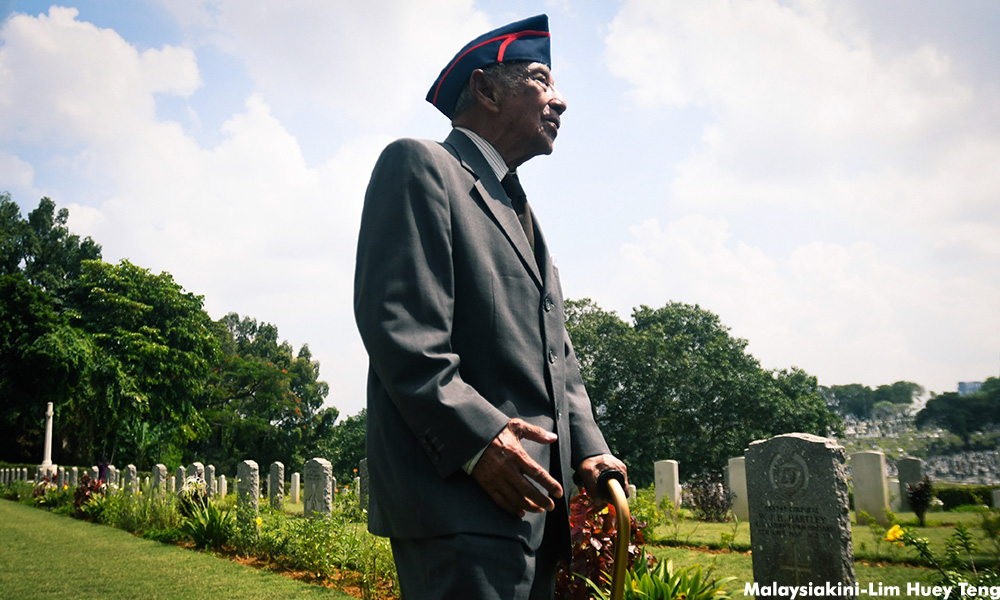

War has no victors, says last surviving WWII vet
MALAYSIANS KINI | Seventy-five years have passed since James Jeremiah joined the Malayan Campaign, which was fought during the Second World War (WWII) from Dec 8, 1941 to January, 1942.
The son of a Frenchman, a railway manager in Indo-China, and Burmese woman, Jeremiah is the last surviving Commonwealth veteran who fought during the Japanese invasion of Malaya in WWII.
At 93, Jeremiah is a bundle of energy, a living heritage, a walking treasure trove of memories of a bygone era.
Vignettes of his life, love and the war remains vivid in his mind, as if history is being replayed over and over again, like a never ending movie.
We travelled back in time when he showed me his treasured collection of black and white photos, his well-read Bible, every page lined with colourful markers, and old but not forgotten love letters sent to him by his beloved wife, Hilda, who died in 2006.
His love for music was evident when he proudly showed me his 2,000 strong collection of vintage vinyl records, still neatly packed in their envelopes.
He opened a cabinet full of wine bottles, in all shapes, sizes and labels, but claims it was just a hobby as all his life, he never took a sip of the drink.
Jeremiah now lives with his eldest daughter Joyce, and his dog, Mario, and time seems to be in a marathon race but the painful memories of war has not faded.
After nearly three-quarters of a century, Jeremiah is still as bewildered as when he first decided to defend his country whenever he hears stories about wars.
“I cannot understand why people want war," he shakes his head, recalling the first Japanese bomb which fell around Penang Airport in Bayan Lepas where he was posted to after his training.
“Any country which fought the war remains the same. America is America, so is the United Kingdom, Germany, even Japan. So what are they fighting for?” he asked, when met at his home in Tanjong Bungah, Penang.
Jeremiah prays everyday that the human race will not see another war as life during those years was hard for everyone....
MALAYSIANS KINI | Seventy-five years have passed since James Jeremiah joined the Malayan Campaign, which was fought during the Second World War (WWII) from Dec 8, 1941 to January, 1942.
The son of a Frenchman, a railway manager in Indo-China, and Burmese woman, Jeremiah is the last surviving Commonwealth veteran who fought during the Japanese invasion of Malaya in WWII.
At 93, Jeremiah is a bundle of energy, a living heritage, a walking treasure trove of memories of a bygone era.
Vignettes of his life, love and the war remains vivid in his mind, as if history is being replayed over and over again, like a never ending movie.
We travelled back in time when he showed me his treasured collection of black and white photos, his well-read Bible, every page lined with colourful markers, and old but not forgotten love letters sent to him by his beloved wife, Hilda, who died in 2006.
His love for music was evident when he proudly showed me his 2,000 strong collection of vintage vinyl records, still neatly packed in their envelopes.
He opened a cabinet full of wine bottles, in all shapes, sizes and labels, but claims it was just a hobby as all his life, he never took a sip of the drink.
Jeremiah now lives with his eldest daughter Joyce, and his dog, Mario, and time seems to be in a marathon race but the painful memories of war has not faded.
After nearly three-quarters of a century, Jeremiah is still as bewildered as when he first decided to defend his country whenever he hears stories about wars.
“I cannot understand why people want war," he shakes his head, recalling the first Japanese bomb which fell around Penang Airport in Bayan Lepas where he was posted to after his training.
“Any country which fought the war remains the same. America is America, so is the United Kingdom, Germany, even Japan. So what are they fighting for?” he asked, when met at his home in Tanjong Bungah, Penang.
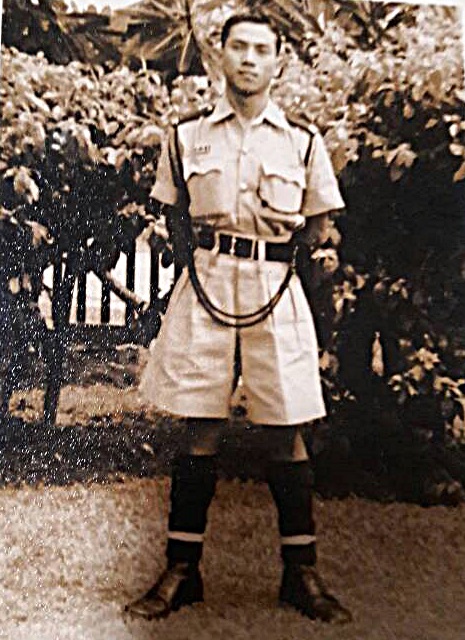 Jeremiah prays everyday that the human race will not see another war as life during those years was hard for everyone.
The words of General Douglas MacArthur when he said in his farewell address on April 19, 1951, after he was fired by American President Harry Truman, “Old soldiers never die, they fade away,” ring crystal clear in his mind.
“I am 93, and soon I will fade away, but I hope my stories will not be forgotten,” Jeremiah said.
Here in his own words, Jeremiah wants you to remember that war has no winners, even the victors suffer and die.
DURING THE WAR, FOOD, BREAD, EGGS AND RICE WERE LIKE GOLD. When others throw bread crusts away, those of us who were hungry, would rush for the crusts. When people finish their food in restaurants, we would rush for the food left in the plates.
Indeed, it was so difficult, as a family of eight, we were only given two cups of rice in cigarette tins, to last for a week. That is war. War does not bring any good things, only hardship, more misery and suffering.
WE CANNOT BE SEEN on the streets after certain hours, it was called “curfew”. Women were abused, raped or turned into “comfort women”. People were punished, beheaded, but whose fault was it? The soldiers from Japan did not know who we were. They would only listen to the locals. The war was also a time for revenge.
PEOPLE SAY THE JAPANESE ARE CRUEL, SADISTS, but so were the Americans, British, and Germans. The locals were even worst, we live everyday in fear. Worst were the ones who instigate, who leaked information, people who wear hoods, and tell on others, to take revenge. They would point out to the Japanese soldiers, the ones they do not like, and the next thing you know, the person’s head is rolling on the ground.
THERE WERE NO TRIALS. NO QUESTIONS ASKED, they just takes the word of the local fella. They do this to strike fear into people. I did not witness any chopping of heads, but I saw them hung on trees and poles to serve as a lesson to others. I carried dead bodies, put in trucks and they were sent to unknown destinations to be buried. They were a lot of looting around when the war broke out, it was chaos everywhere as people were running like headless chickens.
I SURVIVED BECAUSE I OBEYED. If I showed off or spoke too much, I will be gone. You cannot question back. When you pass the Japanese flag, or embassy, or shrine, you have to bow down or you would have to carry rocks on your shoulders for eight hours. If you put your hands down, they would whack you, or force a water hose into your mouth, turn on the tap, until your belly is filled with water, then they would step on it.
Sometimes, when your “crimes” are more serious, they will tie you to their motorcycles, and drag you along the streets.
I had a brother who was sent to the death railway in Burma. He always argued with the Japanese. He was lucky, he came back. I did not suffer much. When they said I cannot have a torch light, I didn't have one, they told me, no radio, I did not have one. Those who had radios were made to hold two pencils to their ears, then they put the radio on, and slammed the pencils into their ears. They asked me to polish their shoes, I did, they asked me to make tea, I did.
WHAT IS WORSE THAN WAR? It is human suffering, the loss of a loved one. In 1982, when my youngest daughter Merlin was 14, she had a minor surgery in her leg. She never work up after that, she slept, in a coma for 31 years. We finally put her to rest, I was heartbroken, for 17 days and 17 nights, I never ate or slept.
IN 2006, MY WIFE PASSED AWAY, no doubt I am old now but even if I were young, I will not marry again. We were married for 55 years. She was of German-Thai parentage, and we had five children. I was devastated when she died after a brief illness. Everyday now, I talk to her. She is always with me. She comes to my dreams every time.
Most of the girls in Penang when I was young, never looked at me, they preferred the ‘orang putih’ (Caucasian) soldiers, and yet I married her. From the day we married, until she closed her eyes, and breathed her last, she called me “darling”. Today, darling means nothing, everyone is a darling. Things are so different then.
TO WHAT DO I OWE MY LONG LIFE? I don’t smoke, drink, or gamble. I do not go out for night life. Never. You ask me where is the best nightclub in Penang, I do not know. I just go to work and come back. I was very strong. It is only after my wife passed away that I got hypertension, cholesterol.
Even when I worked in the railways and had to travel to Hatyai, Thailand, I never joined the night life
MALAYSIANS KINI is a series on Malaysians you should know.
Previously featured:
The last of generations of storytellers
Sarawak’s sape travels across the South China Sea
Art for the people - Manjat's work transcends controversy
M'sia's first blind lawyer not losing sight of importance of education
How a self-taught historian learnt the past through headstones


Are you sure you want to delete this comment?
This action cannot be undone.