



The last of generations of storytellers
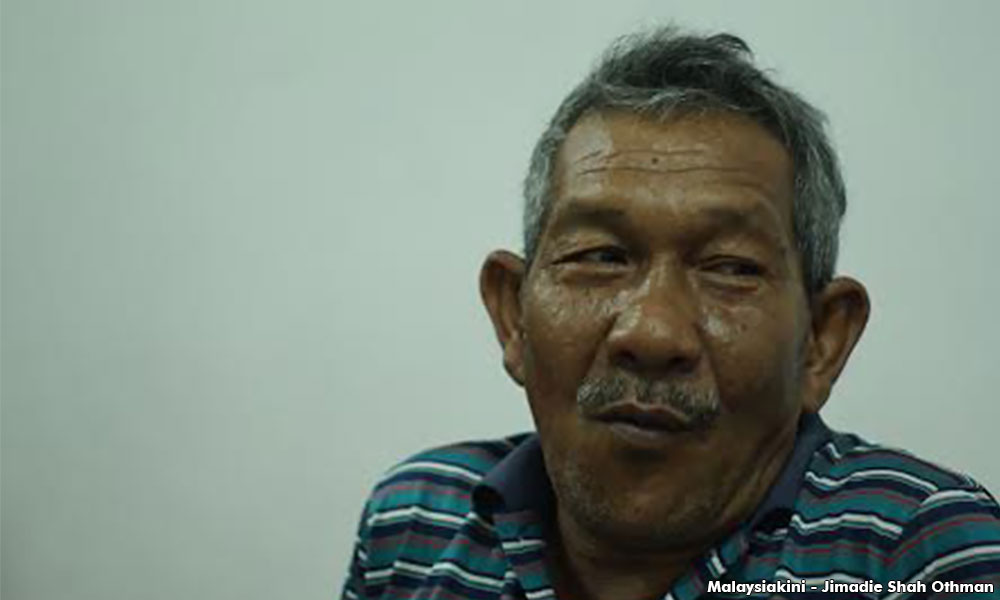
MALAYSIANS KINI | Ramli Mahmud is an unassuming man. Like many villagers in Perlis, the 61-year-old rice farmer was dressed simply in a sarong and T-shirt when Malaysiakini met him two weeks ago at his home in Kampung Pokok Sena, Chuping.
Speaking with a thick northern accent, Ramli is fond of telling gut-busting jokes as he entertains his guests, while smoking traditional cigarettes rolled with nipah palm leaves.
But despite his modesty, Ramli is an important man in the traditional arts scene.
He is the last in a long line of storytellers dubbed Awang Batil, an art form that dates back hundreds of years.
As Awang Batil, the storytellers regale crowds with tales - called ‘hei’ - which are filled with both laughter and sadness, while beating on the batil or brass pot drum.
The act is interspersed with musical performances, traditionally played with a flute.
“We tell stories first. If we are bored than we stop and play a song,” Ramli said.
The name comes from the mythical character Awang, a social outcast who grew to be accepted by his people by playing on a batil
Awang had learned to play the batil from a magical white elephant - who was responsible for creating a puddle which led to Awang’s miraculous conception when his mother drank from it....
MALAYSIANS KINI | Ramli Mahmud is an unassuming man. Like many villagers in Perlis, the 61-year-old rice farmer was dressed simply in a sarong and T-shirt when Malaysiakini met him two weeks ago at his home in Kampung Pokok Sena, Chuping.
Speaking with a thick northern accent, Ramli is fond of telling gut-busting jokes as he entertains his guests, while smoking traditional cigarettes rolled with nipah palm leaves.
But despite his modesty, Ramli is an important man in the traditional arts scene.
He is the last in a long line of storytellers dubbed Awang Batil, an art form that dates back hundreds of years.
As Awang Batil, the storytellers regale crowds with tales - called ‘hei’ - which are filled with both laughter and sadness, while beating on the batil or brass pot drum.
The act is interspersed with musical performances, traditionally played with a flute.
“We tell stories first. If we are bored than we stop and play a song,” Ramli said.
The name comes from the mythical character Awang, a social outcast who grew to be accepted by his people by playing on a batil
Awang had learned to play the batil from a magical white elephant - who was responsible for creating a puddle which led to Awang’s miraculous conception when his mother drank from it.
And so from that tale a line of storytellers was born, with the mantle of Awang Batil passing for the past several centuries from master to student, or in Ramli’s case, from father to son.
His father Mahmud Wahid had named Ramli as his successor in 1974 when the latter was just 14 years old.
He was already capable of performing as Awang Batil then, but said he was “not great”.
“I could perform, but I was shy. (The quality of my performance) was like a toddler who falls when he walks,” he said.
When he finally succeeded his father at the age of 41, Ramli was at first hesitant to take on the role, as there was no longer much public interest in Awang Batil.
He said he gave plenty of excuses to avoid performing, including that the traditional red mask the Awang Batil wore, as well as the batil itself, had been taken by the Perlis museum.
But he said poet Rejab FI had encouraged him to take on the role, and had even secured him the mask and the batil.
“He (Rejab) told me, it is okay if you even play for 10 minutes, they will give you RM600.
“I said, I can’t get RM600 even if I ploughed (my padi) field all morning,” he said.
Since then Ramli has performed across the world, in countries such as Germany, Japan and Brazil, thanks to corporate sponsors like Petronas.
Expanding musical aspect
He has also expanded the musical aspect of the Awang Batil performance to include the violin and rebana (Malay tambourine).
He is even working with musicians such as experimental indie performer Moi Last Von, who is planning on fusing Ramli’s hei with the sound of modern instruments such as electric guitar, drums, and keyboards.
But there are some aspects of tradition that Ramli is unwilling to break - such as the stories told in the hei.
“A professor once told me to tell other stories, like children’s tales,” he said. However he found the idea to be unsuitable for Awang Batil performances.
Now in his twilight years, Ramli is concerned that the centuries old tradition will become extinct.
His own sons have no interest in becoming Awang Batil, and it shows. His front yard is filled with broken down motorcycles that one of his sons, a mechanic, is working on.
There are others who have shown an interest, but so far none are yet ready to become Awang Batil.
“No one is really good yet, not like me,” he said.
However there is still hope, and Ramli said he has identified two potential successors to become the next Awang Batil.
As the interview wound to a close, Ramli urged youths who were visiting him to perform with him.
“I will beat the batil, and you will (recite) the hei (stories),” he said.
MALAYSIANS KINI is a series on Malaysians you should know.
Previously featured:
Art for the people - Manjat's work transcends controversy
M'sia's first blind lawyer not losing sight of importance of education
One computer prodigy’s path to activism
Ostracised, yet young animal lover risks all to rescue animals
How a self-taught historian learnt the past through headstones


Are you sure you want to delete this comment?
This action cannot be undone.