



Penang Gerakan decries application under FOI rejected
The Penang government has rejected a Gerakan Youth leader’s applications for three reclamation agreements under the Freedom of Information (FOI) Enactment.
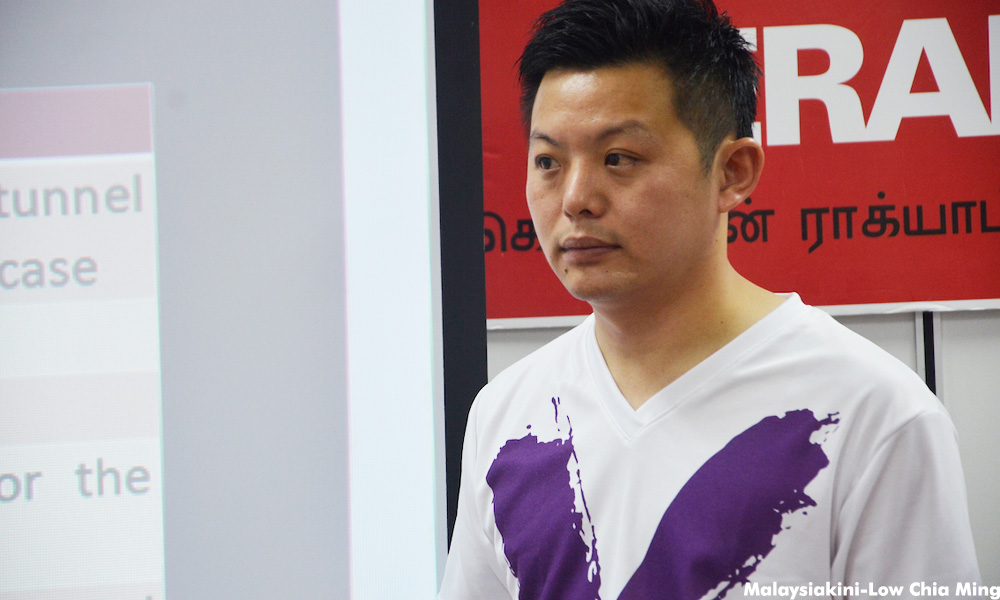
State Gerakan acting Youth chief Jason Loo applied for the documents on March 14 following a dispute in figures involving reclamation of Seri Tanjong Pinang 1 (STP1),2 (STP2) and Gurney Wharf.
“However, I received three separate letters from the State Secretary office on April 4 that all three applications above were rejected,” he told a press conference today...
The Penang government has rejected a Gerakan Youth leader’s applications for three reclamation agreements under the Freedom of Information (FOI) Enactment.
State Gerakan acting Youth chief Jason Loo applied for the documents on March 14 following a dispute in figures involving reclamation of Seri Tanjong Pinang 1 (STP1), 2 (STP2) and Gurney Wharf.
“However, I received three separate letters from the State Secretary's office on April 4 that all three applications above were rejected,” he told a press conference today.
“I was informed that the agreements of STP1 and STP2 reclamation projects were rejected due to the confidentiality clause.
“The agreement for Gurney Wharf reclamation project was rejected because it is a supplemental agreement to the STP agreement and must be read together with the main agreement."
Loo will file an appeal to the Appeals Board on the rejection in line with Section 9 of the FOI Enactment, which was enforced in 2015.
He will be the first individual to file such an appeal.
“As a young lawyer, I will do my part to file the very first appeal in the history of Penang FOI,” Loo said.
In an immediate response, Deputy Chief Minister P Ramasamy, who oversees the FOI implementation, welcomed Loo’s attempt to challenge the FOI at the Appeals Board.
However, he insisted that the documents Loo had applied for were bound by the confidentiality clause.
Prai assemblyperson blamed Gerakan for politicising the FOI, and finding excuses to attack the state administration.
“Anyway, Gerakan has never been sincere about freedom of information, have they just woken up?" Ramasamy asked.
“These documents are not a matter of life and death matters. There are so many issue for Gerakan to tackle but it finds excuses like this to attack the state government."
Penang hiding behind FOI
Loo said the Penang government often boasted about being open and that it practises the CAT (competency, accountability and transparency) principle.
He said his applications were rejected despite Section 11(2) of the FOI Enactment clearly showed that the state authority shall have the power to disclose or declassify the agreements if the public interest for its disclosure outweighs the risk of it.
Loo said the move by the state government to reject his applications was against the spirit of FOI.
He has made 10 applications so far and claimed that various obstacles were imposed on him, such as forcing him to sign a statutory declaration (SD) which he described as “threatening the applicants”.
As for the controversy over the SD, Ramasamy said it was to ensure that the documents were not used for commercial purposes.
Loo said many youngsters believe that Penang is the most transparent state in Malaysia.
“But what we are facing in FOI showed that Chief Minister Lim Guan Eng’s administration is trying their level best to cover up everything.
“For example, they confuse the public with different figures and do not declassify all documents by giving different excuses,” he added.
Loo accused the state government of hiding behind the FOI.
“The chief minister knows that by pushing the blame to the developers (that they do not consent to the disclosure), then he and his administration are safe as they do not have to declassify any documents by using that excuse.” he said.


Are you sure you want to delete this comment?
This action cannot be undone.