




AELB: Bukit Merah dumpsite can become a park
The site where the waste from the Asian Rare Earth (ARE) plant in Bukit Merah, Perak is currently stored is safe enough to be turned into a recreational park.
The site where the waste from the Asian Rare Earth (ARE) plant in Bukit Merah, Perak is currently stored is safe enough to be turned into a recreational park.
According to the Atomic Energy Licensing Board (AELB) director-general Raja Abdul Aziz Raja Adnan, this can be done for the Bukit Kledang waste disposal site after it has been completely sealed, a move scheduled for next year.
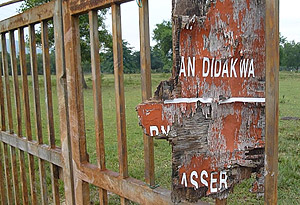 “(The authorities) can turn into a park, a forest reserve or a recreational place. It's no problem. There is no prohibition,” he told reporters at the AELB briefing.
According to Raja Abdul Aziz, the 16 hectare disposal site consist of two engineered cells.
The first engineered cell is used to bury the original components and structure of the ARE under two meters of soil and sealed with concrete.
The second engineered cell will be used for the actual processed waste from the ARE, which was previously stored in chemical safe oil drums in the same site.
The waste will be “stabled” into a concrete matrix to make it “behave like rock”.
The second engineering cell will be sealed off in the form of a hill, and is located 1.7 km from the Ipoh-Lumut highway.
Global best practice
Raja Abdul Aziz said the facility, which is supposed to last for 300 years, cost about US$100 million to build and all construction and maintenance costs are paid by Mitsubishi Chemicals.
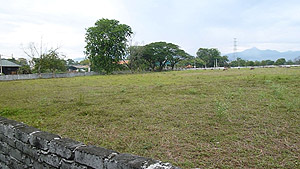 The AELB plays a supervisory role and monitors the radiation level on a daily, weekly and monthly basis in areas up to a 10-km radius from the site, and found the level is “well below the limit for members of public”.
AELB also receives regular updates from Mitsubishi Chemicals’ representatives.
He said the AELB has also requested that the authorities move illegal farms and squatters living within a 1.7-km radius buffer zone to “avoid later complications”.
“We want to keep it unpopulated, not because it is unsafe but to avoid complications as more people move closer to the facility they will want it removed,” he said.
The site of ARE in Bukit Merah has also been decontaminated with radiation levels dropping from 0.65 microsievert per hour to 0.17 microsievert per hour.
He added that this is the only such facility in the world for naturally occurring radioactive materials like thoron and uranium, with other countries releasing such materials into the soil.
“We are not doing this because we want to but because the people want it,” he said, adding that it is seen as a global best practice.
He added that when the ARE plant was approved, there were no such regulations and it is not impossible to say that Mitsubishi would have closed down as it would find it difficult to operate in Malaysia due to prevailing regulations.
Related stories
'Woman with disabled child was not ARE employee'
AELB studying Lynas' letter of undertaking


Are you sure you want to delete this comment?
This action cannot be undone.