




Anwar blames subsidy cuts for high food prices
Opposition Leader Anwar Ibrahim blames the burgeoning food prices on what he terms the "haphazard removal of subsidies".
Opposition Leader Anwar Ibrahim blames the burgeoning food prices on what he terms the "haphazard removal of subsidies".
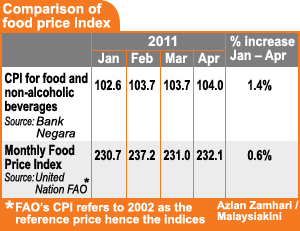
Furnishing statistics from the United Nation's Food and Agriculture Organisation (FAO), he said the increase in food prices in Malaysia was double the global average.
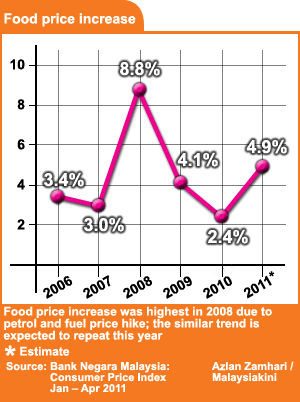
 Bank Negara Malaysia recently released the Consumer Price Index (CPI), showing prices of food and non-alcoholic beverages increasing by 4.9 percent in the first quarter of 2011 over prices during the same period in 2010.
"If this pattern persists for the remainder of the year, 2011 will register the second highest food price increases for the people to bear since 2006.
"This will repeat the pains of 2008, when food prices increased by 8.8 percent due to a sudden hike in petrol and fuel prices," the former deputy prime minister and finance minister said in a statement today.
The CPI for food and alcoholic beverages registered a 1.4 percent increase from January to April this year.
However, in the FAO's monthly food price index, global food prices only increased by 0.6 percent.
Under the subsidy rationalisation plan, the price of RON 97 petrol jumped eight times since its last price of RM1.80 a litre on Dec 16, 2008. Its most recent hike was on May 5, by 20 sen to RM2.90 a litre.
RON97 grade petrol was the standard used by consumers until September 2009, when RON95 was introduced at RM1.75 a litre.
 Household necessities such as sugar also saw a 20 sen price hike to RM2.30 a kilo last week, reducing the government's subsidy for sugar by RM116.6 million to RM400 million a year. Sugar prices went up three times last year, by 20 sen a kilo in January, 25 sen in July and 20 sen in December.
"There is a direct correlation between the haphazard removal of subsidies that affects the majority of Malaysians and the persistent food price increases registered in the first four months of the year," said Anwar.
Painting a grim picture, he also estimates that Malaysians are likely to pay 30 percent more for each food item this year, compared with what they paid in 2005.
"Within six years, food prices have increased by 30 percent, while the average pay increase for Malaysian workers over the period 2001 to 2010 was only 2.6 percent," he said.
All due to a decade of economic mismanagement
Taking a potshot at the BN government and its excuses for withdrawing subsidies, Anwar said the moral and social justifications for offloading a greater financial burden on the people were "weak" and that "the main excesses and wastages that led to the budget deficit in the first place are left untouched".
The people would find it hard to swallow the reality of having to shoulder the responsibility for a decade of the BN's economic mismanagement, he said, especially knowing that the tycoons and cronies who benefitted the most from the largess of the past decade are left unpunished.
Anwar went on to promote Pakatan Rakyat's pet cause, the Buku Jingga, claiming that the opposition coalition would remove the RM19 billion in corporate subsidies given to energy companies and independent power producers (IPPs).
"(We will also) institute an effective war against corruption to prevent an estimated RM28 billion in leakages and wastages suffered by the federal government each year (as concluded from the 2008 Auditor-General's Report).
"A vote for BN is a vote for economic mismanagement and escalating food prices," Anwar added.
Competitiveness ranking drop shocks Pemudah
DAP: BN opiates citizens to hide its sins


Report this comment
Are you sure you want to delete this comment?
This action cannot be undone.