




Anger, fear run high against Lynas plant
It is a scenic drive from Kuantan to the Gebeng industrial area, some 25km northeast of the capital of Pahang.
Small-scale resorts and industries are interspersed between Malay villages that line the coast, as people go about their business; fixing a car, riding a motorcycle to get groceries from the nearby sundry shop, or simply taking it easy at a village coffee shop.
It is a scenic drive from Kuantan to the Gebeng industrial area, some 25km northeast of the capital of Pahang.
Small-scale resorts and industries are interspersed between Malay villages that line the coast, as people go about their business; fixing a car, riding a motorcycle to get groceries from the nearby sundry shop, or simply taking it easy at a village coffee shop.
 “This is part of the tourism belt that links up to (the beach resort of) Cherating,” said Jonathan Wong, who runs an advertising company based in Kuantan.
The clear blue skies and fresh air at the beach along Balok calls out for rest and relaxation, but Wong pointed out that Pahang folk cannot afford either - not until they stop what he believes could be the undoing of human health.
Wong is part of a small but growing group of locals banding together to try and stop Australian mining company Lynas from setting up a rare earth plant in Gebeng.
‘Stop Lynas, Save Malaysia’ was formed just a few weeks ago in March amidst growing fears of potential radiation poisoning from the plant’s operations, which detractors claim is bound to happen.
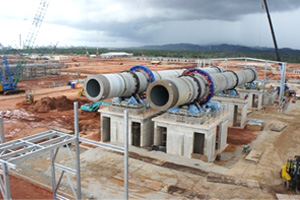
The company has invested some RM700 million to build the Lynas Advanced Materials Plant (Lamp), and expects the project to be completed by September.
The company has assured that the plant will produce ‘zero radiation exposure’ in its operations, and has disassociated it from the controversial Asian Rare Earth that was closed in Bukit Merah, Perak, in 1992.
On its Facebook page, Lynas stressed that the raw material to be processed at Lamp - sourced from the Mount Weld mining site in Western Australia - ‘has naturally low levels of thorium which is 50 times lower than the tin tailings used by Asian Rare Earth’.
Many locals appear unconvinced by Lynas’ assurances, with some rejecting the project outright.
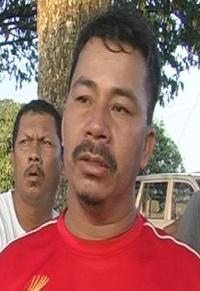 Kuantan Port worker Saufi Harun, 43, who lives in the Balok Makmur housing estate just 3km from the Lamp site, noted that the company is bringing its raw materials a long way from Australia just to process it here.
“I was told it is 2,500km from Australia. Why not do it there? And then we heard the Australians don’t want the waste... something is wrong here,” he said.
Saufi, a father of six, claimed there are easily around 10,000 people living in a 5km radius around the Lynas plant.
“When you mention ‘radioactive’, people get scared. We fear for our future generations,” he said.
Saufi said he he had attended a talk at which a Bukit Merah resident had recounted the sufferings the people are still facing due to radioactive poisoning from the Asian Rare Earth factory.
Abdul Majid Ishak, a TNB worker living in nearby Makmur Perdana, believes there is nothing that the people of Kuantan and its surrounding areas will gain from having the plant up and running.
He claimed that since word got out that the company is going ahead with construction, sales of units in an upcoming housing near where he stays have nose-dived.
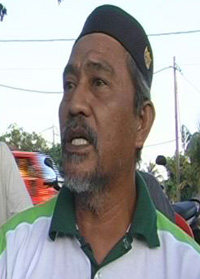 Abdul Majid, 49, was also livid over what he claimed was the authorities’ lack of ‘professionalism’ in addressing public fears, saying he has yet to hear a satisfactory explanation as to why the plant was approved.
“They think that we are just a bunch of labourers and fishermen, so they send some junior officers who are not in a position to deal with our demands and simply ‘play’ with us,” he said.
“We don’t want pollution. We don’t want our lives to be disturbed by these dangerous things... if the people say ‘No’, they (government) must accept (the decision).”
Confronting Lynas at home
The ‘Stop Lynas’ committee has thus far organised several talks to inform and sway public opinion against the plant, but its representative Vincent Jiam sees a long battle ahead.
He said the committee is encouraged by the overwhelming public response to the events, but acknowledged that it will take more than just talks.
Jiam, who runs a kindergarten in Kuantan, said the committee intends to spread the word across the country and in Australia, and to get friends and family to do whatever they can to stop the project.
He said the
 committee is in the midst of organising groups in Australia to confront officials from Lynas and their project partners.
“We have friends and family in Australia, and we have called them out to help us. We will go to the houses of these officials and protest... we want to let their kids know what kind of business their fathers are getting into,” he said.
Jiam admitted that they are getting some help in high places, especially in the Australian Parliament from the likes of Green Party MP Robin Chapple, among others, but still sees very little coming from the Malaysian government.
As Abdul Majid pointed out, the onus is on the government to make a decision that will benefit - and not burden - the people.
“They say ‘People First’; (just) make sure it is not ‘Experiment on the People First’,” he added.
Related story


Are you sure you want to delete this comment?
This action cannot be undone.