




'Crooked bridge': Minister handed EPU letter to Eskay
A former bodyguard to a late long-time deputy home minister testified in the High Court in Kuala Lumpur today that a businessman obtained a letter from the Economic Planning Unit (EPU) awarding him the project to replace the Johor-Singapore causeway with what was supposed to be the Malaysia-Singapore International Gateway (now known as the controversial crooked bridge).
A former bodyguard to a late long-time deputy home minister testified at the Kuala Lumpur High Court today that a businessman obtained a letter from the Economic Planning Unit (EPU), which awarded him the 'crooked bridge' project.
 The multi-million ringgit project was to replace the Johor-Singapore causeway with what was supposed to be the Malaysia-Singapore International Gateway, more popularly known as the controversial 'crooked bridge'.
Mohamad Mahti Abdul Rahim, 63 ( right ), said sometime in 1998, he met Megat Junid Megat Ayob, who was then domestic trade and consumer affairs minister.
“Megat Junid handed over a letter from the EPU to Shazryl Eskay Abdullah. He (Shazryl) was happy.
“It was then that I knew Eskay was given the project, which then cost RM640 million, to replace the Johor causeway,” he said.
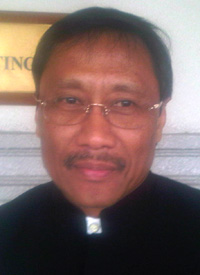 Mahti said this while testifying in a RM20 million breach of contract suit brought by Eskay against Merong Mahawangsa Sdn Bhd and Yahya Abdul Jalil.
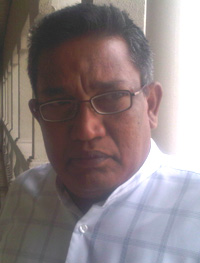
Eskay ( left ), in his statement of claim filed in January 2002, named the two as defendants for whom he claimed he helped procure the government contract.
Presiding judge Justice VT Singham had earlier in the day dismissed the application by the two defendants to strike out the suit, ruling that there were triable issues.
Case has been pending since 2002
Following this, he ordered the trial, which has been pending since 2002, to commence today.
The case had been heard before two other judges prior to Justice Singham.
The plaintiff claims Yahya, who is the executive director of Merong Mahawangsa, had sought his help to secure the contract to replace the Johor causeway with a new bridge connecting Singapore with Johor Baru.
The statement of claim says, “The defendant told me that the government had verbally agreed to award the project to consortium Detik Nagasari Sdn Bhd, through privatisation. Yahya said his company Ibex Corporation Amalgamated Sdn Bhd holds a 20 percent stake in the consortium.
“Yahya wanted my help to use my good ties with the Malaysian government to increase his equity in the consortium from 20 percent to 60 percent. Yahya also knew I had a good network with international funders.”
Eskay claimed that if the Malaysian government awarded Merong Mahawangsa 60 percent of the consortium, the plaintiff would be appointed as a partner and hold an equity share of 16.66 percent in Merong.
Sometime between April 2 and 14, 1998, Yahya handed over an agreement between Ibex and the plaintiff (Eskay) for consideration of signing. However, Eskay disagreed with the terms in the draft.
Eskay said he did not sign the agreement because Yahya informed him there were several VVIPs who wanted to be partners and directors in Merong Mahawangsa and that Yahya proposed he (Eskay) be paid a one-off payment of RM20 million.
Initially, the plaintiff rejected the proposal, but he decided to accept the one-off payment offer.
Sometime in February 1998, Eskay secured a guarantee from the firm Charles E Jay, based in Alabama, United States, for a loan of RM640 million as initial requirement for the proposed project.
Plaintiff met Anwar
Charles E Jay agreed to give a long term development loan for a period of 20 to 25 years at an annual interest of four percent.
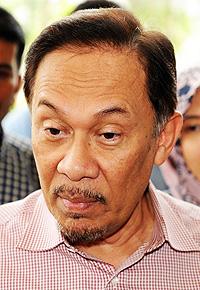
After securing the guarantee letter from the American firm, he met then-finance minister and deputy prime minister Anwar Ibrahim over the proposal and for Yahya to meet the minister.
 “Anwar (
right
) agreed to meet Yahya at his official residence the next day, where Yahya explained about him wanting Ibex to be given a 60 percent equity share. Anwar advised both of us to write directly to then-EPU director-general Ali Abul Hassan Sulaiman.
“Anwar (
right
) agreed to meet Yahya at his official residence the next day, where Yahya explained about him wanting Ibex to be given a 60 percent equity share. Anwar advised both of us to write directly to then-EPU director-general Ali Abul Hassan Sulaiman.
Eskay also claimed he sought Megat Junid's assistance to help increase Merong’s stake in the consortium.
“Sometime around June 25, 1998, the EPU and prime minister awarded the project, known as 'Proposal to build a bridge to replace the Johor causeway’, to consortium Suria Kalbu Sdn Bhd, which which Ibex had a 60 percent stake, while Transwater Corporation and Diversified Resources Bhd each had a 20 percent stake.
The plaintiff got to know the privatisation project, renamed the Malaysia Singapore International Gateway, had become a turnkey project and it included the construction of the Integrated Customs, Immigration and Quarantine (CIQ) complex, a road bridge and railway swing bridge.
Eskay alleged the defendants had reneged on the agreement or pledge to pay him RM20 million for services rendered to secure the contract and increase the Ibex stake in the consortium.
He is also claiming interest at eight percent a year, costs and other relief deemed fit by the court.
Defence statement
Merong Mahawangsa in its statement of defence claims the allegations made are wild.
It said it obtained the project known as the crooked/scenic bridge on merit and it was under the design-and-build concept or turnkey contract basis.
Merong claimed the project was terminated by the Malaysian government on April 12, 2006, and the preliminary work was not done.
It also said the letter dated June 25, 1998, was not an award letter.
Yahya, in his defence, similarly maintains he obtained the project on merit. He denied making any offer, saying it was the onus of the plaintiff to prove the case.
Mohti, who is now a goat breeder, in replying to questions from Eskay's lawyer CV Prabhakaran, said he knew the minister had given Eskay an access card for him to come to the ministry.
The firm of AB Teoh and Shahriza is acting for Eskay while Stanley Chang is representing the defendants.
The trial continues tomorrow with Eskay, and possibly Anwar, testifying as witnesses for the plaintiff.


Are you sure you want to delete this comment?
This action cannot be undone.