




MRT - largest infrastructure project to date
The Mass Rapid Transit (MRT) project meant to address Kuala Lumpur’s public transport woes is expected to be the largest infrastructure project to date, said a Performance, Management and Delivery Unit (Pemandu) representative.
The Mass Rapid Transit (MRT) project meant to address Kuala Lumpur’s public transport woes is expected to be the largest infrastructure project to date, said a Performance, Management and Delivery Unit (Pemandu) representative.
“It is safe to say that...the estimated cost is about RM48 billion (and) it’s going to be the single biggest infrastructure project that this country is going to undertake, at least until 2020,” said Greater Kuala Lumpur deputy lab leader Ahmad Suhaili Idrus.
The figure arrived at during the eight-week lab process - in which mainly members of the private sector took part - is some RM12 billion higher than the previously reported estimate .
“The project proponent has already been proposed at the conceptual stage including (undertaking) alignment and stops,” he told the Greater Kuala Lumpur breakout session at the launch of the Economic Transformation Programme (ETP) yesterday.
Greater Kual
 a Lumpur
(right)
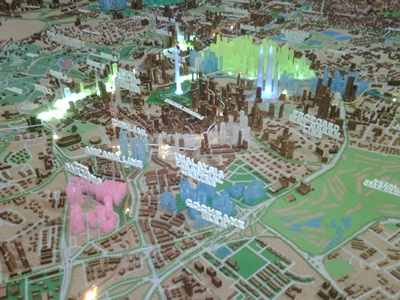
is one of 12 national key economic areas identified under the ETP.
a Lumpur
(right)
is one of 12 national key economic areas identified under the ETP.
Ahmad Suhaili, who is also Pemandu national key results area director, added that consultants are in the final stages of reviewing the project.
Project elements, including funding, will only be sorted out once the thumbs up is received.
In Aug
 ust, Land Public Transport Commission (LTC) chairperson Syed Hamid Albar
(left)
told the press that the study will be completed this month.
ust, Land Public Transport Commission (LTC) chairperson Syed Hamid Albar
(left)
told the press that the study will be completed this month.
According to reports, independent consultants Minconsult Sdn Bhd and Andercon Technologies Ltd embarked on the feasibility study in July.
Construction of the project, aimed at improving connectivity by adding more stations and lines to the current Light Tail Transit system, is expected to start this time next year.
It is understood that the project, currently at the technical review stage, will likely be fully completed between 2018 and 2019, although the first trains are estimated to run by 2016.
The line will be 156km long, covering a radius of 20km from the city centre,and will have a capacity of two million passengers per day.
RM172 billion required
Other projects under the same national key economic area include:
- providing more green open spaces
- creating a comprehensive pedestrian network
- creating iconic places and attractions
- developing an efficient solid waste management ecosystem and
- revitalising the Klang River.
Plans have
 also been mooted to attract 100 of the world’s most dynamic firms in priority sectors, like healthcare and information and communication technology.
Improved quality of life is expected to attract the right mix of internal and external talent, and provide opportunities for an expanding property development market.
The 10 projects are estimated to contribute growth to the region and increase employment from 2.5 million in 2010 to 4.2 million by 2020.
They require total funding of RM172 billion in the next 10 years of which 66 percent will come from the private sector.
Greater Kuala Lumpur involves the 10 local authorities of Kuala Lumpur, Klang, Kajang, Selayang, Ampang Jaya, Subang Jaya, Shah Alam, Petaling Jaya, Putrajaya and Sepang.


Are you sure you want to delete this comment?
This action cannot be undone.