




FOI: Public can demand undocumented data
On the night of March 8, 2008, the results of the general election were not official yet but it was almost certain that the opposition parties had more state seats and that they would team up to form the new Selangor government.
On the night of March 8, 2008, the results of the general election were not official yet but it was almost certain that the opposition parties had more state seats and that they would team up to form the new Selangor government.
Scores of eyewitnesses had since claimed that while the gates to the state secretariat building (SUK) were sealed shut, several officers were seen carting off or destroying tomes of state documents.
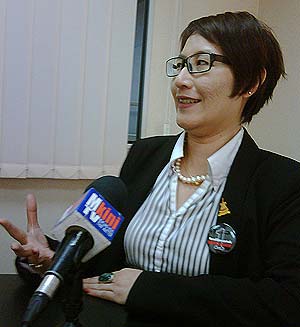 The new state government helmed by Menteri Besar Khalid Ibrahim had to start all over, with practically no records at their disposal.
"But they were nice enough to leave me a paper clip," said exco member for tourism, consumer affairs and environment Elizabeth Wong, when reminiscing about the first time she opened the desk drawer in her office at the SUK.
The Pakatan government has come a long way since then, after having had to go back to the various government departments to get copies of many of the official documents that had been destroyed.
Empowering the people
Despite all this, the Pakatan government of Selangor has turned the other cheek and is now moving to pass the Freedom of Information Enactment, a move that will empower the people to access absolutely any state document - as long as it does not threaten national or personal security.
In the first part of an exclusive interview with Malaysiakini , Wong explains what kind of information will be made public, as well as the process.
 In the nationally unprecedented FOI enactment -
tabled
by Wong herself in the state legislative assembly yesterday - even information that has yet to be documented by the various agencies under the state government will not escape public perusal.
In the nationally unprecedented FOI enactment -
tabled
by Wong herself in the state legislative assembly yesterday - even information that has yet to be documented by the various agencies under the state government will not escape public perusal.
According to her, the public can write to the information officers who will be appointed by the various state government agencies and if the information is not available, the public can compel the agency concerned to research for the data.
"Of course it has to be within our means. You can't write to us and ask us for an environmental audit of everything under the sun in Selangor.
"Maybe, if we are given RM10 billion and 10 years to research it, we can do it. But for now we'll just have to reply to the person who requested it, saying that we don't have such information.
"But if it is something reasonable, we can get it done but the person who requested it should give us time to get the data," Wong said.
The public should also be prepared to fork out money for duplication of documents which, she said, would be a nominal sum.
Not all information will be at fingertips
At the same time, the cost of duplication could vary from a simple photocopy of an A4-sized paper to a big, complex copy of a satellite image in full colour, which would cost quite a bit.
Applications that are "vexatious, unreasonable and repetitive" can also be refused.
"For example, if someone repeatedly writes to me, requesting for numbers of dengue deaths in Selangor, I can refuse him or her, because it is not under my jurisdiction. I will give an explanation first, but later I can just ignore it," Wong said.
Similarly, requests for minutes of the Exco meetings to be delivered to a person's doorstep every week will not be entertained if this is not done through the proper channels.
But with that said and done, not every Tom, Dick and Harry can simply request for any information.
"They must have interest in the subject and it must concern them. We cannot give out information just like that. You must tell us why," she added.
Training for civil servants
With the law expected to come into force in the middle of next year, the state government now has one year to train the civil servants in dealing with the requests.
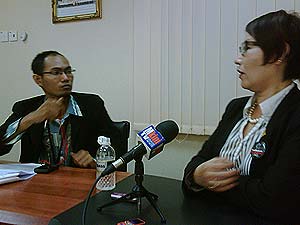 Wong said the information officers, to be appointed by the heads of departments themselves, would also be given training in interpersonal skills, since they would not have encountered such requests under the Barisan Nasional administration.
But even then, she doubts that the civil servants would experience any "culture shock".
"They have been forewarned. We have been talking about it for quite a while. But we'll wait and see if there is a big change," she said.
In a move that has been on Wong's lips since 2006 - when she was an activist with human rights NGO Suaram - the PR state government said it was merely fulfilling what was pledged in its manifesto.
One general election and six drafts of the enactment later, to "wait and see if there is a big change" might just be a huge understatement.


Report this comment
Are you sure you want to delete this comment?
This action cannot be undone.