




Austerity chief: No pain, no gain
Malaysians will not “dance on the streets” when the government retracts subsidies for many essentials, warns Minister in the Prime Minister’s Department Idris Jala.
Malaysians will not “dance on the streets” when the government retracts subsidies for many essentials, warns Minister in the Prime Minister’s Department Idris Jala.
Speaking at the Performance Management and Delivery Unit (Pemandu) Subsidy Rationalisation Lab “open day” in Kuala Lumpur this morning, Idris told his audience that an austerity drive was inevitable.
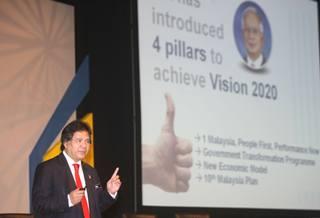 “This is the most unpopular decision the government has had to make since independence. It will never be popular and if you want to wait until it is popular, we will never do it in our lifetime.
“My worry is that if we vote not to do this, our children will condemn us. A saying that I live by is that in life, there is no gain without pain, and there is no breakthrough without breakdown,” he said to crowd of about 1,000, with some seen nodding in agreement.
Donning his old corporate hat, the former MAS chief executive officer strayed from his rostrum, opting for a more freestyle presentation, while he pitched to his audience mostly made up of businessmen, civil servants and the public.
Quest to be developed nation
Reciting from memory with a few quick glances of his presentation slides, Idris said the government does not have much choice if it wants to cut its deficit and move Malaysia towards a developed nation status.
"We have no choice or else we will end up like Greece. These bold steps would take us closer to 2020," he said.
In his speech, Idris warned that Malaysia would go bankrupt by 2019 unless subsidies for fuel, food, electricity and other staples are removed.
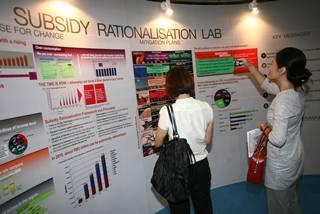 A record high of RM74 billion were paid in subsidies last year while budget deficit hit a 20-year high, prompting the federal government to consider subsidy cuts.
The move is bound to be politically damaging for Prime Minister Najib Abdul Razak and likely to cause inflation and dampen growth.
However, the opposition and civil society are arguing that and subsidy cuts must be staggered with a greater emphasis on plugging leakages and stamping our corruption.


Report this comment
Are you sure you want to delete this comment?
This action cannot be undone.