




'Why I chose to return to Malaysia'
The queue to leave the country may not be getting shorter, but against all odds, some are making their way back home.
The queue to leave the country may not be getting shorter, but against all odds, some are making their way back home.
The reasons for returning to the homeland are varied. For some, homesickness does not fade with time, while others return out of filial duty.
One thing for sure is that those coming home are not making the journey for a sake of better quality of life, better education for their children, higher levels of personal security or higher wages.
Ironically, while some leave for lack of hope, it is hope that is carrying others back home.
Despite scepticism, the country is at a crossroads, and many have returned to ensure whatever the changes, they will occur for the better.
In response to the New Economic Model (NEM)'s focus on attracting Malaysian talent back, Malaysiakini spoke to several former emigrants to find out why they bucked the trend.
Below are their stories. We would love to hear yours. Email us at editor@malaysiakini.com
Wan Saiful Wan Jan, 35, Institute of Democracy and Economics Affairs (Ideas) chief executive. Lived in Britain for 17 years, and returned last year.
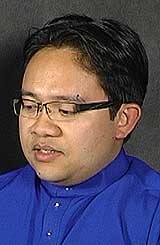 I came back because there is this opportunity to start something, Ideas. Also, Malaysia is changing and the fact that documents like the NEM report are coming out now shows that this is the time to influence change.
It shows the country is charting its path towards change. That attracted me home.
Someone who is doing his final year of studies in New Zealand asked me whether he should come back as soon as he finishes.
I said he should stay, become an expert in his field and return as someone.
Don't come back wanting to work for someone but come back as someone who would create jobs, employ others and provide expertise for the country.
If I remind myself of the conversations I've had with friends when I was living in London, I recall them saying, "Why should we come back to a country like Malaysia where you can't trust the police because they ask for bribes, where you are at risk as soon as you say something that is considered wrong?"
If you had asked me in April last year I would've said that I had no intention of returning, at least until retirement. It had to do with the political system.
I was involved with the Conservative Party in the UK, which is an opposition party.
Despite everyone knowing (this) people still respected(it). The people at the work place were asking me if I wanted time off work to campaign properly.
I cannot imagine that happening here. As soon as you say that you are with Pakatan Rakyat, that is the end of your life, more or less. (Laughs).
The political culture is deep with this feeling that you need to victimize people who don't support you.
That needs to change urgently to encourage people to come home.
Or if you want to attract people (including non-Malaysians) to contribute their skills, we should allow people permanent residence-ship.
I question why we are so hung up on not allowing people multiple citizenship.
Many countries practice this. Why are we not allowing that?
Akhramsyah Sanusi, 37, oil and gas professional. Studied and worked for 15 years in Australia, the Netherlands and Singapore .
I came back to Malaysia after studying and working overseas from 1991 to 2003.
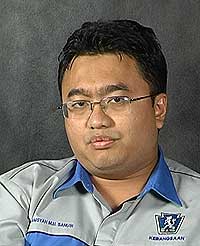 I came back because my mother called and said, "(Fourth Prime Minister) Dr Mahathir (Mohamad) is leaving, so if you remember that he has helped you in any way, you must come back and serve the country while he is still PM".
I came back in the last month that he was PM, and served Malaysia. I can say that it was his rule that helped put me where I was.
So for a while I thought I would stay in Malaysia and be happy, but then the rent seeking shot up and by 2005, I was looking around and left for Singapore. For Singapore for God's sake! (Laughs).
What drove me to return was the fact that I thought, ‘Hey, it's going to change back to something better.' I came back with this second hope. It is hope that drives you back, but to a certain extent duty.
I have worked in Australia and the Netherlands. I have also worked in Singapore but I think their issues are similar to ours, only masked better.
Let's look at Australia. They are still a very resource-based economy, and it's not hung up over it's not industrial, it's not hung up over the fact that it's still agrarian to some extent.
But it's a developed not because it's currency is strong and people can live in relative wealth but because it's culture is developed.
Now I'm going to get in trouble because people would say ‘You call Australians culturally developed?' (Laughs).
But I would say so because when they talk about development they don't talk about money or material wealth.
They don't talk about everyone having a car or a television. We are still hung up on that.
Okay, it's because some people here still can't afford TVs, but it comes to a point where development has to be more than this.
It has to be inside, intellectual, where society moves not just for material wants but other wants which are, for lack of a better word, civilized. (Laughs)
Richard Yeoh, 57, director of Research for Social Advancement. Relocated from the United States in 1981.
I worked in the international department of a bank in Philadelphia USA in 1979/81.
I decided to return home around the time that Hussein Onn retired and Dr Mahathir Mohamad became PM as I was hopeful that Mahathir would transform government and its policies, especially his initial emphasis on a clean, efficient and trustworthy administration as embodied in his "Bersih, Cekap, Amanah" slogan.
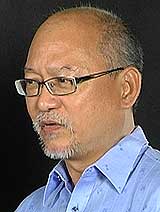 He appeared very dynamic and in a hurry to bring the nation forward.
The main reason that motivated me to return to Malaysia was my strong bond with the country of my birth and the belief that I had a stake in the future of the nation.
I was also very hopeful that the government would uphold its pledge of a fair deal for all and that every Malaysian had a place in the Malaysian sun.
Thirty years later, I must confess that I am not sure I made the right move but certainly for me, there is no turning back and I will swim or sink with this nation.
Deep down within me, I have faith that Malaysians will collectively do the right thing and steer the nation in the right direction despite the resourcess and time we have lost as a result of corrupt and misguided policies.
In this global age, we are free to seek our fortunes worldwide and I do not begrudge our people, especially the younger generation for doing so.
However, I find the most Malaysians regardless of ethnicity do hold a very strong bond with the nation and long to return when conditions are better and when they feel that all Malaysians can have an equal stake and citizenship.
Part 1: M'sian talent in high demand overseas
Part 2: 'Why I left Malaysia' - emigrants tell their tale
‘Why I chose to return to Malaysia' - we would love to hear your stories. E-mail us at editor@malaysiakini.com


Report this comment
Are you sure you want to delete this comment?
This action cannot be undone.