




When detainees turn grass-eaters...
Leptospirosis, a communicable disease, has been linked to environmental contamination in Malaysian detention centres, where eight deaths have been recorded this year.
Leptospirosis, a communicable disease, has been linked to environmental contamination in Malaysian detention centres, where eight deaths have been recorded this year.
Dr Anis Salwa Kamarudin of the Health Ministry’s public health division said the cases are linked to certain habits of detainees, such as eating grass and walking around barefooted.
“Some of these detainees like to eat grass which grows in the camp (compound),” she said in a written response on how the disease spreads and what measures are being taken to prevent the incidence of communicable diseases in immigration detention centres.
In May, two detainees died of leptospirosis at the Juru immigration detention centre, while six more succumbed in August at the KLIA immigration detention depot.
Anis explained that infection occurs either directly through contact with urine or tissues of animal carcasses, or indirectly through the contaminated environment soil, water, drainage and plants.
This includes consumption of contaminated food and water, as well as breathing air with the leptospira bacteria.
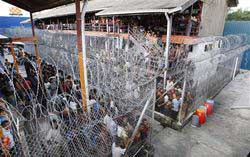 The spread of infectious diseases in detention centres is also due to overcrowding and poor hygiene, Anis said.
"Diseases spread easily where the population density is high - scabies, impetigo, tuberculosis, pneumonia and influenza are among the communicable diseases," she said.
Diarrhoea, enterovirus, hand, mouth and foot disease, salmonella, Hepatitis A and polio are spread through contaminated faeces, while Hepatitis B and C, HIV/Aids and cytomegalovirus are caused by contamination of the blood.
Anis said the ministry has taken several measures to ensure the health and safety of the detainees, to control leptospirosis among other diseases.
These include annual inspection of cleanliness of living quarters, water supply, and areas where food is handled, prepared and served.
Medical services are extended to immigration detention centres every fortnight, with referrals to hospitals when required.
‘More needs to be done’
Tenaganita director Florida Sandanasamy said, however, that much more can and should be done to improve the health of detainees.
She questioned the quality and adequacy of food and water supplies, pointing out that no one will resort to eating grass unless they are desperate.
Detention centres should have an in-house doctor to provide immediate medical attention, she said.
"When detainees complain of sickness, they are often not taken seriously and have to repeatedly ask for treatment. Sometimes, when their condition worsens and they are rushed to the hospital, it is too late.
"The government should also have better planning in space allocation, as it is a known fact that densely populated areas attract all kind of diseases.”
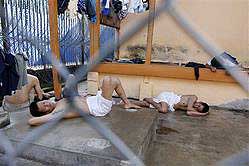 Florida also pointed to dirty toilets and the lack of proper bedding - or filthy, bug-infested items - as other sources of problems.
“In fact, the detainees are not given a change of clothes, sometimes having to wear the same clothing until they are released," she claimed.
She also called for attention to the mental health and overall well being of detainees, as this has been neglected by the government.
"The detainees suffer from trauma and abuse, and are very prone to depression," she added.


Are you sure you want to delete this comment?
This action cannot be undone.