




'Expect tax-cuts in feel good budget'
This is according to financial analysts who share their predictions ahead of the budget proposals being tabled on Friday.
The government could announce cuts in personal income tax and corporate tax in Budget 2010, when it is tabled in Parliament on Friday.
However, according to financial analysts who predict this, such changes will be largely cosmetic and done to appease the public.
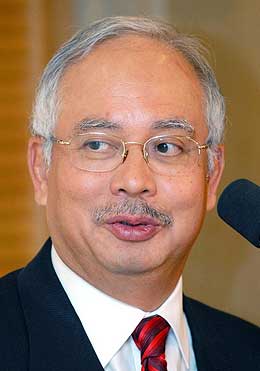 Prime Minister Najib Abdul Razak will table the budget speech in his capacity as finance minister. He will reportedly place economic recovery and the needs of the people ahead of reducing the growing budget deficit.
Agreeing with this direction, the analysts said he foresees that subsidies will be reined in to reduce the operational expenditure, but one speculates that it will be done gradually by changing the focus from general subsidies to targeted ones.
The analysts also believe that the government may reduce the operational budget by curbing expenses and being more efficient in its spending. This could see a reduction in allocations, with savings on utilities and travel to reduce wastage and leakages.
All of them agreed that implementing a goods and services tax (GST) would be beneficial in broadening the revenue base, but most said it is not yet time to implement the move because the economy is still in a fragile state.
Below are views from some experts:
Azhar Othman, Head of Corporate Research, Affin Bank
Individual taxes have not been changed for a long time so people are expecting this. So we can perhaps expect the government to cut individual taxes, but only minimally. Corporate tax may also be cut, but this will only be to please the people.
The government cannot impose drastic cuts on income tax as such a move would drain the coffers. If we cut personal income tax and corporate tax then the government will have to rely on oil exports.
Subsidies need to be taken back, but only gradually, because the current situation is still fragile. Right now we are too heavily dependent on the US.
The US economy is seemingly recovering but if it makes a U-turn, then we will face an equally bad situation. Therefore, we need to focus on propping up the domestic economy.
GST however cannot be imposed at the moment even if it means a higher revenue stream for the government.
 If (it is) introduced, everyone will be taxed and this will have a very detrimental effect on domestic consumption and the retail industry. There is only room to introduce the GST if there is a large cut in income tax because people cannot be doubly burdened.
The government recently increased taxes on tobacco, so it cannot impose (additional) taxes in such a short period of time.
Yeah Kim Leng, Chief Group Economist, Ratings Agency Malaysia
Right now, the focus must be on sustaining (economic) recovery, so the implementation of GST would not be prudent.
We do not expect the GST to be implemented next year (but) we do expect a timetable as to when it will be implemented, to indicate the government's seriousness on the matter.
Most countries are embarking on very strong fiscal deficits to ride the global recession - 7-8 percent is still comparatively bearable and it meets current market expectations. The private sector understands that there is a need to sustain a deficit for the sake of economic recovery. It would be imprudent not to do so, and this will be penalised by the market.
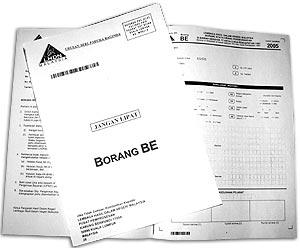 Personal income tax currently makes up less than 10 percent of the total government revenue. Seeing that this is the prime minister's maiden budget, I think we can speculate that there will be a move to bring personal income tax down, (alongside a reduction in) corporate tax.
The government can reduce expenditure by cutting down waste and reining back subsidies. The shift from a general subsidy to one that is targeted to those with a low income is a key area for 2010, and we see this through the implementation of rice vouchers.
If the petrol subsidy is abolished, we can expect a 2-3 percent drop in fiscal deficit. This approach would give more 'bang for your buck'.
Vincent Khoo, Head of Research, UOB Kayhian
The budget will be largely business-friendly because the prime minister wants to show that he is fiscally responsible.
Half of the budget has already been revealed through the fiscal stimulus plans, so the market will be quite neutral to the budget.
The government may introduce the GST, but it will not be implemented in 2010.
 It is cutting back on subsidies, like those for palm oil and petroleum. So the operational expenditure will drop. Operational expenditure will also drop through smaller departmental budgets, through efficient spending.
Development expenditure (or spending on social infrastructure) will certainly increase in 2010 as it is the final year of the 9th Malaysia Plan and there are allocations yet to be spent.
On a matter of deficit and growth, it is a delicate balance, but I think the development expenditure will be enough to make people happy because the global economy is recovering.


Are you sure you want to delete this comment?
This action cannot be undone.