




Suhakam lobbies Geneva for continued Status A
It is learnt that two representatives from Suhakam (Malaysian Human Rights Commission) are now on their way back to Kuala Lumpur after spending several days in Geneva arguing its record on human rights.
It is learnt that two representatives from Suhakam (Malaysian Human Rights Commission) are now on their way back to Kuala Lumpur after spending several days in Geneva arguing its record on human rights.
 It’s known that the two representatives are Suhakam chairman Abu Talib Osman (
pic
) and Commissioner Choo Siew Kioh, a former High Commissioner to India. Apparently, they have been advised that “a flurry of activities alone isn’t sufficient” and pending legislation falls short of expectations.
It’s known that the two representatives are Suhakam chairman Abu Talib Osman (
pic
) and Commissioner Choo Siew Kioh, a former High Commissioner to India. Apparently, they have been advised that “a flurry of activities alone isn’t sufficient” and pending legislation falls short of expectations.
The duo was on a mission to brief the Sub-Committee on Accreditation (SCA) of the International Coordinating Committee of National Institutions for the Protection and Promotion of Human Rights (ICC), according to several Suhakam Commissioners who declined to be named.
Suhakam faces an imminent downgrade in status from A to B if the human rights body fails to be in compliance with the Paris Principles on Human Rights. Status A allows Suhakam and Malaysia to have speaking rights on human rights issues at all UN organs and other international bodies.
“Status B denies these rights and reduces the country virtually to the category of an outcast on human rights,” according to a Suhakam commissioner who is serving his final term in accordance with pending legislation before Parliament.
The SCC at its March session this year recommended that the review of Suhakam’s status be deferred to its session later in September and that the Malaysian Human Rights Commission be allowed to retain its A status in the meantime.
This recommendation was approved by the ICC Bureau on May 28, according to the Suhakam commissioners.
In March, the SCA welcomed proposed amendments to the 1999 Human Rights Commission of Malaysia Act. The amendments were passed by the Dewan Rakyat on March 25 and are currently before the Senate.
The SCA noted in a posting carried on the Suhakam website that “some of the concerns raised during its session in April last year had been addressed i.e. the expansion of the term of office from two years to at least three years and renewable for one term only”.
Continued exclusion of civil society
However, the SCA notes that the legislation is yet to be finalised. Moreover, not all its concerns raised during its April 2008 sessions have been addressed.
These include “greater transparency in the appointment process, the requirement for a more broad-based representation in the nomination process, and review and selection of commissioners”. In particular, the SCA notes “the continued exclusion of civil society”.
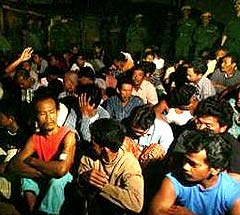 NGOs in Malaysia have complained in the past, according to a Suhakam commissioner, that “those with a passion for human rights and a track record in the field are being excluded as commissioners”, a point accepted by the SCA at its April session last year.
The SCA refers to General Observations 2.1 “Ensuring Pluralism” and 2.2 “Selection and Appointment of the Governing Body”.
The SCA has also noted with concern the nature of the performance indicators established by the prime minister and used in relation to re-appointment or dismissal decisions.
The SCA holds that “such indicators must be clearly established, appropriately circumscribed so as not to interfere with the independence of commissioners and must be made public”. The SCA refers to its General Observations 2.9 “Guarantee of tenure for members of governing bodies”.
Elsewhere, the SCA stresses the need for Suhakam to continue to promote ratification and implementation of international human rights instruments in line with General Observation 1.4 “Interaction with the International Human Rights System”.
.
The SCA will consider whether these issues have been dealt with through further amendments to the pending legislation or through regulatory or administrative mechanisms which are “clear, transparent and participatory”.
Last December, in a statement to the Asia Pacific Forum of National Human Rights Institutions, Suhakam reiterated that the ISA (Internal Security Act) should be repealed and Act 597 pertaining to the formation of the commission be amended so that it complied with the Paris Principles.
Litany of complaints against Malaysia
The statement, signed by Suhakam secretary Hashimah Nik Jaafar, said its stance on the ISA was “consistent with the Universal Declaration of Human Rights in particular and other international human rights norms in general”.
Meanwhile, the Human Rights Council on a Universal Periodic Review (UPR) submission on Malaysia last September referred to Malaysia’s Aide Memoire in April 2006 in support of its election to the Human Rights Council.
“Events before and after the Aide Memoire belie the assertions by Malaysia in seeking election to the Council,” said the HRC.
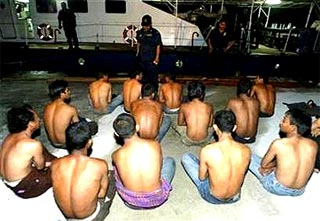 Malaysia’s April 2006 Aide Memoire reads in part: “The increasing threat posed by terrorism worldwide has highlighted the importance of balancing security concerns with the preservation of individual liberties”.
It went on to say that drawing on prior experience, “Malaysia believes that it has achieved this balance” and suggests that “Malaysia’s experience in managing a plural society would bring an important dimension to the work of the new Human Rights Council”.
The Human Rights Council went through a long litany of complaints against Malaysia in Sept last year.
Aside from the ISA “to silence the opposition and bloggers”, mention is made of “a whole raft of emergency ordinances which undermine fundamental rights and liberties such as freedom of assembly, expression, the right to due process”.
Also brought up was the dubious role of the half million strong untrained Rela (People’s Volunteer Corps or Ikatan Relawan Rakyat) in arresting undocumented workers and criminals, and the lack of protection for domestic workers.
Malaysia should 'rescind the ISA'
The Human Rights Council has since recommended that Malaysia “rescind the ISA” and “release all detained under the Act or charge them in a court of law in accordance with international fair trial standards”.
Also, it has been recommended that Malaysia ratify core human rights treaties including the International Convenant on Civil and Political Rights, the International Covenant on Economic, Social and Cultural Rights, the Convention against Torture and other Cruel, Inhuman and Degrading Treatment or Punishment, the Convention relating to the Status of Refugees and its additional protocol, and the International Covenant on the Protection of the Rights of All Migrant Workers and Members of their Families.
In this regard, the Human Rights Council urged that Malaysia revoke the 2006 Memorandum of Understanding with Indonesia and conclude comprehensive labour agreements with all countries that send labour to Malaysia.
In addition, it has been further urged that Malaysia immediately begin the process of bringing domestic law into conformity with the international instruments once ratified and abolish Rela.
One outgoing Suhakam commissioner fervently hopes that the national human rights body will retain its Status A and that he will be proven wrong in his forecast that a downgrading is imminent.
“The Malaysian government is not serious about human rights issues and only ventures forward with cosmetic legislation when under pressure,” said the commissioner who requested anonymity.
“They are not interested in any legislation which will threaten the ruling party’s continued hold on power,” he added.


Are you sure you want to delete this comment?
This action cannot be undone.