




Sabah Ports locks horns with east coast shippers
Sabah Ports (SPSB) have locked horns with the shipping community along the east coast following a series of roadshows announcing that the Sepanggar Bay Port would be designated a Domestic Hubbing Service (DHS) for all container cargo coming into Sabah.
Sabah Ports (SPSB) have locked horns with the shipping community along the east coast following a series of roadshows announcing that the Sepanggar Bay Port would be designated a Domestic Hubbing Service (DHS) for all container cargo coming into Sabah.
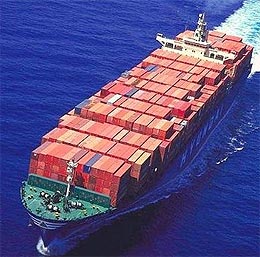 The SPSB reason: the shrinking volume of containers calling at the various ports and, ostensibly, the need to reduce consumer costs.
The nearest other hub is in Bintulu, Sarawak while the national load centre, under the National Cabotage Policy, is in Port Klang.
The roadshows, mainly with shipping agents and chambers of commerce in the east coast and also including affected private and government agencies, had been expected to win support for the proposed DHS in Sepanggar but not everyone is entirely convinced. Questions have been raised about “fair and best business practices, transparency, consensus and monopolies”.
The Tawau Forwarding Agents Association (TFAA) for one, the first to go public with their grievances, wonders why the proposed Sepanggar DHS cannot be similar to that in Bintulu.
“The Bintulu DHS, unlike the one planned for Sepanggar, adopts an open policy. Vessels are also allowed to call at Kuching, Sibu and Miri,” said TFAA chairman Tan Chew Kong.
“If Sarawak can do it, why not Sabah? Is it because SPSB wants to cut down the cost of maintaining the ports? If that is the case, why did the Sabah Ports Authority allow them to take over the ports?”
Tan warns that the state government should not leave any east coast port idle since it would throw hundreds of people out of work in the region and even quite a number of industries would be forced to shut down because of the monopoly enjoyed by Sepanggar.
Impact on shipping agents
SPSB has confirmed that once the DHS is launched, all container vessels would not be allowed to call at any east coast port. All cargo will be discharged at Sepanggar Bay Port and subsequently discharged by barge to any individual destination.
Likewise, outward export cargo for shipment within the country or overseas have to go through Sepanggar.
SPSB doesn’t deny that the DHS will have an impact on shipping agents but thinks that this cannot be avoided since it would result in cost reduction for the people of Sabah, lower cost of shipping, help develop the state’s logistics sector and promote Sabah’s industrial growth as envisaged under the Sabah Development Corridor masterplan.
“Owing to the trend of shrinking volume of containers, calling at a designated loading point (hub port) as opposed to direct calling from/each individual east coast port will in fact be a gain to shipping lines as they are now presented with the choice to re-route their vessels to a more profitable destination instead of incurring small volumes for a long journey,” explains SPSB senior manager (business development) Sebran Ahmad.
“Otherwise, it will be consumers who will bear the high logistics costs.”
He points out that land haulage of containers from Kota Kinabalu to the east coast and vice versa wasn’t a very cost-efficient approach either and notes “this form of trucking is still practised in Lahad Datu”. Further, he doesn’t see anything preventing forwarders from taking to the road with their containerised cargo.
Monopoly of the shipping industry?
Sebran dismissed fears of the SPSB monopolising the shipping industry and assured that neither the company nor its subsidiaries will be involved in the containerised transfer operations. Other promises include dedicated berthing, windows berthing system, dedicated container yard management, reduced terminal handling charges and fixed scheduling at Sepanggar.
Sabah Ports does not see any parallels with the Bintulu DHS which is a Federal port and has adopted an open policy with regards to the smaller state-run ports such as Kuching, Sibu and Miri.
“As a private Federal port, Bintulu Port does not have jurisdiction over the other Sarawak ports and, therefore, does not have the authority to implement any form of transfer (cargo) policies within the state,” said Sebran.
“It would not be very correct, therefore, to propose that SPSB follow Bintulu Port’s practice as SPSB and Bintulu Port operate on very different levels.”
In short, SPSB is a state port and manages the other eight state ports which are dispersed through Sabah.
The DHS concept proposes the consolidation of the state’s container volume at a single loading hub (Sepanggar), “thus creating the potential mass container volume to entice main liners to call at Kota Kinabalu and Sepanggar”.
Tan meanwhile still thinks it’s ironic that at a time when Sabah was calling for the scrapping of the National Cabotage Policy, which has designated Port Kelang as the national load centre for Malaysia, SPSB is planning on turning Sepanggar into a DHS for the state.
National Cabotage Policy gets the blame
The National Cabotage Policy has been blamed for the higher consumer prices in Sabah and Sarawak vis-à-vis Peninsular Malaysia and for crippling the industrialisation, growth and economic development of the two states in the last half century.
“Investors would think not twice but thrice before coming here if container vessels are prohibited from calling at east coast ports,” claims Tan.
“I wonder how long, with the anticipated 40 per cent drop in volume of imports into Tawau, would it take for a container to be tugged to Tawau after having arrived at Sepanggar?
"Basically, it will take at least three days to travel by sea from Kota Kinabalu by scow.”
He does not think that the dedicated berthing and the windows berthing system planned at Sepanggar will make much of a difference in the turnaround time.
The TFAA fears that if the waiting period is too long, importers will make their own arrangements to have their cargo declared at Kota Kinabalu and truck it back to Tawau. In that case, the already sunset shipping community in Tawau, and the other east coast ports, is expected to vanish. At present, east coast ports contribute significantly to SPSB’s bottomline through general cargo and liquid bulk with palm oil being the main commodity, and these are not expected to be affected.
Traders in Kota Kinabalu do not see any immediate prospects of reduced consumer prices following the implementation of the DHS at Sepanggar.
“Consumers prices are by their very nature partially inelastic and would not respond to any lowering of fuel oil or shipping charges,” said one big trader who imports western consumer perishables directly from Australia, Europe and America for the expatriate community.
“However, if fuel oil prices or shipping charges increase, consumer prices react almost immediately and rise upwards. Only greater competition or consumer resistance will lower prices in the market in the long run,” he added.


Report this comment
Are you sure you want to delete this comment?
This action cannot be undone.